The Role of Emotional Intelligence in Leadership: Skills, Benefits, and Strategies
Updated: 14 Mar 2026
Leadership today requires much more than authority, technical knowledge, or years of experience. In the modern workplace, leaders must understand people, communicate effectively, and create an environment where employees feel valued and motivated. This is where emotional intelligence in leadership becomes essential.
Emotional intelligence refers to the ability to recognise, understand, and manage your own emotions and those of others. Leaders who develop strong leadership emotional intelligence can build stronger relationships, resolve conflicts peacefully, and inspire their teams to perform at their best.
In the past, many organisations focused mainly on technical expertise or intelligence quotient (IQ) when selecting leaders. However, businesses now realise that emotional intelligence for leaders plays a critical role in managing teams, improving workplace culture, and achieving long-term success.
A leader who understands team members’ emotions can respond to challenges with empathy and clarity. This ability allows leaders to guide employees through stressful situations, motivate them during difficult projects, and maintain a positive working environment. As a result, companies with emotionally intelligent leadership often experience better collaboration, stronger employee engagement, and improved productivity.
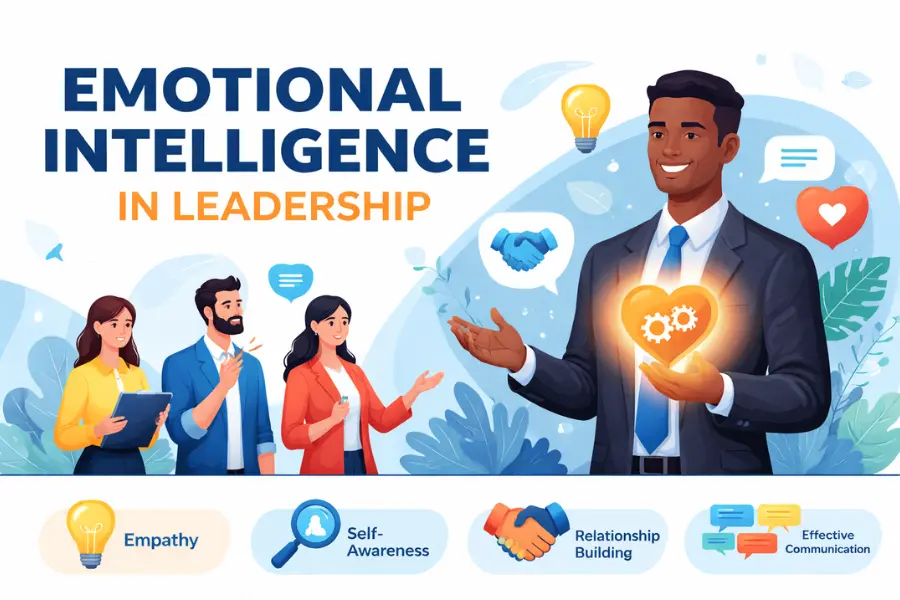
This article explores the role of emotional intelligence in leadership, explains why it is important for modern organisations, and highlights practical ways leaders can develop their emotional intelligence to become more effective and inspiring.
What Is Emotional Intelligence?
Emotional intelligence is the ability to recognise, understand, and manage your own emotions and those of others. Unlike traditional intelligence, which measures analytical thinking or problem-solving, emotional intelligence focuses on awareness, empathy, and social skills, qualities that are essential for effective leadership. In the context of leadership, emotional intelligence enables leaders to understand how emotions influence behaviour, decision-making, and team dynamics. Leaders with strong emotional intelligence for leaders can communicate more effectively, build trust, resolve conflicts, and inspire their teams. By developing emotional awareness and interpersonal skills, leaders create a positive workplace culture where employees feel valued, understood, and motivated to perform at their best.
The Importance of Emotional Intelligence in Leadership

Understanding Emotional Intelligence
Emotional intelligence is the ability to recognise emotions, understand their impact, and manage them effectively. It includes both personal awareness and the ability to understand others’ feelings. In the workplace, emotional intelligence helps leaders manage teams, communicate effectively, and make balanced decisions.
Unlike traditional intelligence, which focuses on logic and problem-solving, emotional intelligence focuses on how people handle emotions in different situations. Leaders with strong emotional intelligence understand how emotions influence behaviour and decision-making.
For example, when a team faces a challenging project deadline, a leader with emotional intelligence can recognise signs of stress among employees. Instead of reacting with pressure or frustration, the leader offers guidance, support, and encouragement to keep the team motivated.
The Five Core Components of Emotional Intelligence
Experts often describe emotional intelligence as comprising five key components that form the foundation of leadership.
Self-Awareness
Self-awareness is the ability to recognise your own emotions and understand how they affect your behaviour. Leaders who practice self-awareness in leadership are honest about their strengths, weaknesses, and emotional reactions.
Self-Regulation
Self-regulation refers to controlling emotional responses. Effective leaders avoid reacting impulsively and instead respond calmly and thoughtfully to challenges.
Motivation
Emotionally intelligent leaders are internally motivated. They focus on long-term goals and inspire their teams to stay committed and productive.
Empathy
Empathy is one of the most important leadership qualities. Empathy in leadership allows leaders to understand employees’ perspectives, feelings, and concerns.
Social Skills
Strong social skills help leaders communicate effectively, resolve conflicts, and build strong professional relationships.
Together, these five components form the foundation of leadership and emotional intelligence.
Why Emotional Intelligence Is Important in Leadership
In modern organisations, leadership is not only about giving directions or managing tasks. It is also about understanding people, supporting team members, and creating a positive work environment. This is why emotional intelligence in leadership has become an essential quality for successful leaders. Leaders who develop strong emotional awareness can recognise how their actions and decisions affect others. They are better at communicating, resolving conflicts, and motivating employees. The importance of emotional intelligence in leadership lies in its ability to strengthen trust, improve teamwork, and build a workplace culture where employees feel respected and valued. One of the most significant ways emotional intelligence benefits leadership is by helping leaders build stronger relationships with their teams.
Building Stronger Relationships with Teams
One of the biggest advantages of emotional intelligence in leadership is the ability to build strong relationships. Leaders who understand emotions can communicate clearly and create an environment where employees feel respected and heard.
When leaders listen to employees and respond with empathy, trust grows naturally. Trust is essential for teamwork, collaboration, and productivity.
Improving Decision Making
Decision-making is a critical leadership responsibility. Leaders with emotional intelligence consider both logical factors and emotional impacts when making decisions.
For example, when implementing workplace changes, emotionally intelligent leaders consider how employees might feel and communicate with them in a supportive, transparent way.
Creating a Positive Workplace Culture
The importance of emotional intelligence in leadership becomes especially clear when building a workplace culture. Emotionally intelligent leaders promote respect, cooperation, and open communication.
This approach reduces misunderstandings and encourages teamwork. As a result, employees feel more comfortable sharing ideas and solving problems together.
The Role of Emotional Intelligence in Effective Leadership
In today’s competitive, fast-changing business environment, leadership requires more than technical expertise and decision-making skills. Leaders must also understand and manage their own and others’ emotions. This is where emotional intelligence in leadership plays a vital role. Emotionally intelligent leaders can recognise emotional signals, respond thoughtfully to challenges, and build stronger connections with their teams. The role of emotional intelligence in leadership is especially important for guiding employees, resolving workplace issues, and fostering a supportive environment that encourages growth and collaboration. Leaders who develop strong emotional intelligence leadership skills can inspire trust, improve communication, and motivate their teams to achieve organisational goals more effectively.
Understanding Team Members’ Emotions
The role of emotional intelligence in leadership includes recognising employee emotions and responding appropriately. Leaders who understand team morale can address issues before they become serious problems.
For example, if employees feel overwhelmed by workload, an emotionally intelligent leader may redistribute tasks or provide additional support.
Managing Workplace Conflict
Workplace conflicts are inevitable, but emotionally intelligent leaders handle them constructively. Conflict resolution leadership requires listening carefully, understanding different perspectives, and guiding employees toward fair solutions.
Instead of blaming individuals, emotionally intelligent leaders focus on resolving issues and strengthening relationships.
Inspiring and Motivating Employees
An emotionally intelligent leader understands what motivates employees. Some employees value recognition, while others appreciate opportunities for growth and learning.
By understanding these motivations, leaders can create an environment where employees feel inspired to perform their best.
Benefits of Emotional Intelligence in Leadership
Emotional intelligence has become one of the most valuable qualities for modern leaders. Organisations are increasingly recognising that leadership success is not determined only by technical knowledge or authority, but also by the ability to understand and manage emotions effectively. The benefits of emotional intelligence in leadership can be seen in many areas of the workplace, including stronger communication, improved teamwork, and higher employee satisfaction. Leaders who demonstrate leadership emotional intelligence are better equipped to build trust, resolve conflicts, and motivate their teams. By practising empathy, self-awareness, and effective communication, emotionally intelligent leaders create a positive work environment where employees feel respected, supported, and encouraged to perform at their best.
Better Team Collaboration
One of the major benefits of emotional intelligence in leadership is improved teamwork. Leaders who promote emotional awareness encourage employees to support each other and communicate openly.
Increased Employee Satisfaction
Employees who feel understood and respected are more satisfied with their work. Emotionally intelligent leaders create an environment where employees feel valued and appreciated.
Higher Productivity and Performance
Motivated employees work more efficiently and contribute more effectively to organisational goals. Emotional intelligence helps leaders create conditions that support productivity.
Stronger Organisational Culture
Organisations led by emotionally intelligent leaders often develop stronger cultures built on respect, cooperation, and trust. These qualities strengthen organisational leadership skills and improve long-term success.
Emotional Intelligence Leadership Skills Every Leader Needs
Effective leadership requires more than strategic thinking and decision-making abilities. Leaders must also develop strong interpersonal skills to understand people, manage emotions, and build positive relationships in the workplace. This is where emotional intelligence leadership skills become essential. Leaders who possess these skills can communicate clearly, handle workplace challenges calmly, and inspire their teams with confidence and empathy. The connection between leadership and emotional intelligence enables leaders to guide employees more effectively while maintaining a supportive, respectful environment. By strengthening key leadership soft skills such as self-awareness, empathy, communication, and adaptability, leaders can improve team performance, increase employee engagement, and create a more productive workplace.
Self-Awareness
Leaders who understand their emotions are better prepared to manage stressful situations and guide their teams effectively.
Empathy
Empathy allows leaders to connect with employees on a deeper level. It helps leaders understand how employees feel and respond with compassion.
Communication Skills
Strong leadership communication skills are essential for building trust and ensuring clear information flow within teams.
Adaptability
Emotionally intelligent leaders adapt to changing circumstances and respond calmly to challenges.
These abilities form the foundation of modern leadership soft skills.
Examples of Emotional Intelligence in Leadership
Understanding the theory behind emotional intelligence in leadership is important, but seeing it applied in real-world situations makes it truly valuable. Emotionally intelligent leaders demonstrate their skills through everyday interactions, decisions, and behaviours that positively impact their teams. For example, a leader who listens actively during a conflict and seeks to understand all perspectives shows strong leadership emotional intelligence. Similarly, supporting employees through stressful projects, acknowledging their achievements, and encouraging collaboration are practical ways for leaders to demonstrate emotional intelligence. By consistently applying these skills, leaders not only strengthen trust and communication within their teams but also create an environment where employees feel motivated, respected, and empowered to succeed.
Handling Workplace Conflict
A leader who listens carefully to both sides of a disagreement demonstrates emotional intelligence. Instead of escalating conflict, the leader focuses on understanding perspectives and finding solutions.
Supporting Employees During Stress
Recognising employee stress and offering support are examples of emotional intelligence in leadership.
Encouraging Team Collaboration
Leaders who encourage open discussions and idea sharing create stronger teams.
How Emotional Intelligence Improves Leadership Skills
Emotional intelligence is more than just understanding feelings. It is a powerful tool that enhances a leader’s ability to guide, motivate, and inspire their team. Leaders who develop emotional intelligence in leadership can manage stress effectively, communicate clearly, and respond thoughtfully to challenges. By being self-aware, they recognise how their emotions influence decisions and interactions. Through empathy, they understand their team members’ needs and perspectives, thereby strengthening relationships and fostering trust. These qualities directly enhance leadership skills, enabling leaders to resolve conflicts constructively, encourage collaboration, and motivate employees to perform at their best. In short, emotional intelligence for leaders transforms ordinary management into impactful leadership that drives both team performance and organisational success.
Better Team Motivation
Understanding what drives employees helps leaders motivate them effectively.
Stronger Communication
Emotionally intelligent leaders prevent misunderstandings by communicating clearly and respectfully.
Improved Problem Solving
Leaders with emotional intelligence combine logic and empathy, resulting in better solutions.
Ways to Develop Emotional Intelligence as a Leader
Developing emotional intelligence in leadership is a deliberate and ongoing process. Leaders who actively work on their emotional awareness and interpersonal skills can become more effective, empathetic, and inspiring. One important step is practising self-reflection, which helps leaders understand their emotional triggers and how their behaviour affects others. Improving listening skills allows leaders to truly hear their team members, fostering trust and open communication. Seeking constructive feedback from colleagues and employees provides valuable insight into areas for growth.
Additionally, managing stress effectively ensures that leaders remain calm and clear-headed during challenging situations. Finally, cultivating empathy, the ability to understand and relate to others’ feelings, strengthens relationships and improves decision-making. By focusing on these strategies, leaders can enhance their emotional intelligence and leadership skills and create a more positive, productive, and motivated workplace.
Practice Self-Reflection
Regular self-reflection helps leaders recognise emotional triggers and improve decision-making.
Improve Listening Skills
Active listening strengthens relationships and improves communication.
Seek Feedback from Team Members
Constructive feedback helps leaders identify areas for improvement.
Manage Stress Effectively
Stress management techniques help leaders remain calm under pressure.
Develop Empathy
Understanding different perspectives helps leaders build stronger relationships.
These practices help leaders develop emotional intelligence.
Emotional Intelligence Strategies for Effective Leadership
Leaders can apply several emotional intelligence strategies to improve their leadership effectiveness and management approach.
Build Trust with Your Team
Transparency and honesty help leaders gain employee trust.
Encourage Open Communication
Leaders should create opportunities for employees to express ideas and concerns.
Promote Emotional Awareness
Encouraging employees to understand their emotions improves teamwork.
Support Employee Well-Being
A healthy work environment improves motivation and performance.
Challenges Leaders Face Without Emotional Intelligence
Leaders who lack emotional intelligence often experience several challenges.
Poor Communication
Misunderstandings occur when leaders fail to recognise emotional cues.
Workplace Conflicts
Unresolved conflicts can damage team relationships.
Low Employee Motivation
Employees may feel disconnected from leaders who lack empathy.
Weak Team Collaboration
Without emotional awareness, teamwork becomes difficult.
Emotional Intelligence vs Traditional Leadership
Leadership has evolved significantly over the years. Traditional leadership often relied on authority, hierarchy, and control, with decisions made primarily on the basis of rules, processes, or technical expertise. While this approach could achieve short-term results, it often neglected the human element of management. In contrast, emotional intelligence in leadership emphasises understanding emotions, building relationships, and inspiring teams. Emotionally intelligent leaders focus on empathy, communication, and collaboration, allowing them to motivate employees, resolve conflicts, and adapt to changing situations effectively. By integrating emotional intelligence into their approach, modern leaders create a more inclusive, supportive, and productive workplace than traditional leaders do with their rigid, top-down style. This shift demonstrates why organisations now prioritise emotional intelligence for leaders as a core component of effective leadership.
Traditional Leadership Style
Traditional leadership often focuses on authority, hierarchy, and strict management.
Emotionally Intelligent Leadership Style
Emotionally intelligent leadership focuses on collaboration, empathy, and communication.
Why Modern Businesses Prefer Emotionally Intelligent Leaders
Modern organisations value leaders who can manage people effectively, build relationships, and inspire teams.
The Future of Leadership and Emotional Intelligence
As workplaces continue to evolve, emotional intelligence will become even more important. Remote work, diverse teams, and complex business challenges require leaders who understand people and processes.
Leaders who develop emotional intelligence will be better prepared to guide organisations through change and uncertainty.
Conclusion
In today’s dynamic workplace, leadership requires more than technical expertise. Successful leaders must understand people, communicate effectively, and create an environment where employees feel motivated and valued. This is why emotional intelligence in leadership has become a critical skill for modern leaders.
Emotionally intelligent leaders demonstrate empathy, self-awareness, and strong communication abilities. These qualities help them build trust, resolve conflicts, and inspire employees to perform at their best.
The importance of emotional intelligence in leadership continues to grow as organisations recognise the value of supportive and collaborative work environments. Leaders who invest time in developing emotional intelligence leadership skills are better equipped to guide teams, manage challenges, and achieve long-term success.
Ultimately, emotional intelligence is not just a leadership skill. It is a powerful tool that enables leaders to create stronger teams, healthier workplaces, and more successful organisations.





- For bold: [b]text[/b]
- For italic: [i]text[/i]
- For underline: [u]text[/u]
