The Future of Leadership: Navigating the Challenges of a Remote Workforce
Updated: 16 Mar 2026
Traditional office environments have changed dramatically over the past few years. Many companies once depended on employees working together in physical workplaces with fixed schedules and face-to-face collaboration. However, advances in digital technology, evolving employee expectations, and global workplace shifts have transformed how organisations operate today. Businesses are now moving toward more flexible work models that support remote work culture, digital workplaces, and modern leadership strategies.
Remote work has rapidly evolved from a temporary solution into a standard way of working. Many organisations now recognise that employees can remain productive and engaged outside traditional office settings. As a result, companies are adopting flexible work models that support remote work leadership, virtual team management, and distributed workforce strategies. These changes are shaping new leadership trends in remote work and redefining how leaders guide their teams.
Companies around the world are increasingly relying on distributed teams working from different cities, countries, and time zones. This global workforce approach allows businesses to access skilled professionals regardless of location while encouraging innovation and diversity. At the same time, managing remote employees requires strong remote workforce management, effective remote team collaboration, and reliable digital communication tools.
This shift in the workplace is forcing leaders to rethink their management styles. Traditional leadership methods that relied on close supervision and in-person meetings are becoming less effective in remote environments. Instead, leaders must adopt modern leadership strategies, focus on trust-based leadership, and encourage remote team productivity through clear goals and strong communication.
As organisations continue to evolve, the future of leadership in a remote workforce becomes increasingly important. Companies must prepare leaders to guide teams across virtual environments while maintaining strong performance, engagement, and collaboration. Understanding the future of remote work leadership helps organisations remain competitive in a rapidly changing business landscape.
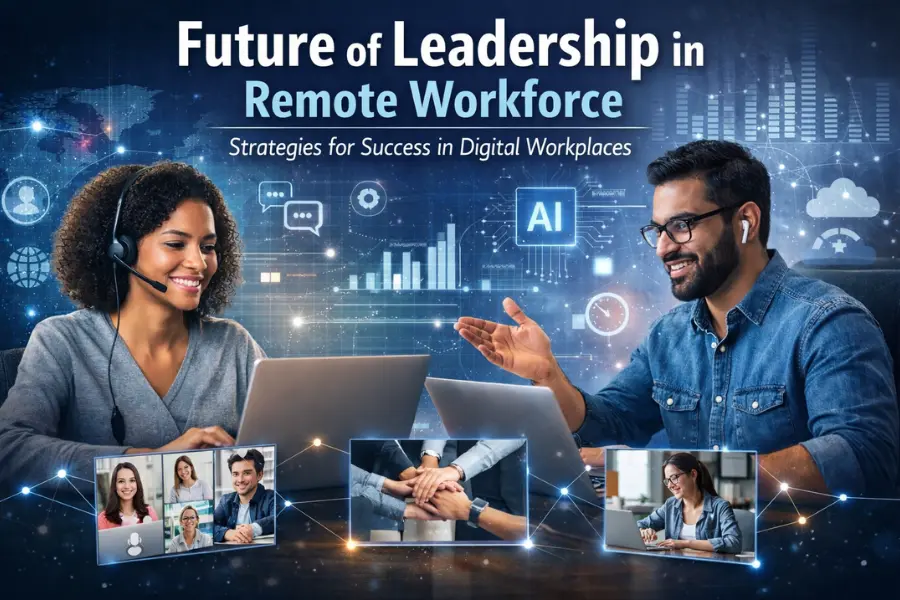
Successful remote work leadership requires a combination of flexibility, empathy, and adaptability. Leaders must develop strong digital leadership skills, improve virtual communication, and promote employee engagement in remote teams. By mastering these abilities, leaders can successfully manage distributed teams and prepare their organisations for the future of leadership in a remote workforce.
Understanding the Rise of the Remote Workforce
The modern workplace is experiencing a major transformation as remote work becomes increasingly common across industries. In the past, most organisations relied on traditional office environments where employees worked in the same physical location. Today, however, businesses are embracing new working models that allow employees to perform their tasks from anywhere. These changes are shaping new trends in the remote workforce and redefining how companies build and manage teams.
Growth of Remote Work Around the World
One of the biggest drivers of remote work growth is rapid technological advancement. Digital communication tools, cloud-based platforms, and collaboration software have enabled employees to work together even when they are located in different parts of the world. Video conferencing, project management tools, and instant messaging platforms allow teams to share ideas, manage projects, and stay connected without needing a physical office. These innovations have made remote collaboration more efficient and reliable than ever before.
As technology continues to evolve, companies are no longer limited to hiring talent from their local regions. Businesses are now recruiting skilled professionals from different countries and time zones, creating a truly global remote workforce. This approach enables organisations to find the best talent regardless of location while also increasing diversity within teams. By hiring internationally, companies can access specialised skills and unique perspectives that strengthen innovation and creativity.
Another noticeable trend is the rise of distributed teams. Instead of gathering employees in one office, many organisations now build teams that operate across multiple locations. These teams collaborate digitally and often include professionals working from home offices, coworking spaces, or remote hubs. As a result, businesses are creating global workplaces where geographic boundaries no longer hinder productivity.
Reasons Businesses Are Adopting Remote Work
Many organisations are choosing remote work because it offers significant cost savings. Maintaining large office spaces, utilities, and on-site facilities can be expensive for businesses. By allowing employees to work remotely, companies can reduce operational costs and allocate resources more efficiently. This financial advantage is one of the key benefits of remote work for companies.
Another major reason businesses adopt remote work is the ability to access global talent. Instead of being limited to local job markets, organisations can hire experts from around the world. This expanded talent pool enables companies to build stronger, more capable teams that bring diverse experiences and perspectives to the workplace.
Remote work also increases employees’ flexibility, often leading to higher job satisfaction. Workers appreciate the ability to manage their schedules, reduce commuting time, and maintain a better work-life balance. This flexibility contributes to a healthier remote work culture where employees feel more empowered and motivated.
In many industries, remote work has also improved productivity. When employees work in comfortable and personalised environments, they often experience fewer workplace distractions. Combined with clear goals and effective communication, remote teams can achieve strong performance and efficiency.
Impact on Organisational Structure
The rise of remote work is also changing how organisations structure their leadership and management systems. Traditional hierarchical models, where decisions flow from top management to employees, are gradually evolving. Modern organisations are shifting toward more collaborative approaches that encourage teamwork and shared responsibility.
In remote environments, leaders cannot rely solely on physical supervision. Instead, they must emphasise open communication, trust, and transparency. Building trust between leaders and employees becomes essential for maintaining productivity and engagement. As a result, companies are adopting more flexible leadership styles that support collaboration and empower remote teams to succeed.
Why Leadership Must Evolve in a Remote Work Era
The shift to remote work has fundamentally changed how leaders guide and manage their teams. Traditional leadership, which often relied on physical supervision, face-to-face meetings, and direct oversight, is no longer sufficient in a world where employees are dispersed across cities, countries, and even continents. Leaders must now embrace digital leadership skills and adopt strategies that are designed for a virtual environment. This evolution is critical for organisations that want to maintain productivity, engagement, and a strong company culture.
From Traditional Leadership to Digital Leadership
In traditional office settings, leadership often meant being physically present. Managers could observe employees at work, provide on-the-spot guidance, and intervene when issues arose. However, in remote environments, physical supervision is impossible. Leaders can no longer rely on simply “being there” to manage their teams effectively. Instead, they must adapt to technology-driven leadership approaches, using digital tools to monitor projects, communicate expectations, and ensure accountability. This transition represents a major leadership transformation, where success depends on clarity, communication, and trust rather than proximity.
Remote leadership also requires flexibility and adaptability. Unlike a conventional office, remote teams face challenges such as time zone differences, varied work environments, and technological barriers. Leaders must understand these challenges and adopt virtual leadership strategies that enable them to guide teams effectively while accounting for the realities of remote work. Clear goal-setting, transparent processes, and proactive communication are essential components of modern leadership.
The Need for Trust-Based Leadership
A core element of leading in a remote workforce is building trust. Micromanagement, which might have been common in traditional settings, is often counterproductive in virtual teams. Leaders need to empower employees by giving them autonomy, trusting them to meet deadlines, and valuing their input. This trust-based approach not only improves employee satisfaction but also enhances performance and creativity. Employees who feel trusted are more engaged, take ownership of their work, and contribute to team success.
Empowering employees also requires consistent communication. Leaders must provide guidance and resources without being overbearing. By focusing on outcomes rather than constant supervision, leaders foster a culture of accountability, collaboration, and innovation. This approach is central to developing future leadership skills that are effective in remote work environments.
The Role of Technology in Leadership
Technology plays a critical role in enabling modern leadership. Video conferencing tools such as Zoom or Microsoft Teams allow leaders to host meetings, connect with team members, and maintain regular check-ins. Project management platforms like Asana, Trello, or Monday.com help teams stay organised, track progress, and meet deadlines efficiently. Communication software, including Slack and email, provides channels for quick updates, team discussions, and problem-solving.
By leveraging these tools, leaders can implement technology-driven leadership strategies that ensure smooth collaboration, transparency, and accountability across remote teams. Digital tools not only support operational efficiency but also allow leaders to focus on strategic decision-making, employee development, and team engagement.
Ultimately, the evolution from traditional to digital leadership is not just a response to remote work. It is a critical step toward future-ready leadership. Leaders who develop strong digital leadership skills, embrace trust-based approaches, and effectively utilise technology will be well-equipped to navigate the challenges of distributed teams and foster high-performing virtual workplaces.
Major Challenges of Leading a Remote Workforce
Leading a remote workforce comes with unique challenges that differ significantly from managing teams in a traditional office environment. While remote work offers flexibility, access to global talent, and other benefits, it also creates complexities for leaders who must ensure productivity, engagement, and team cohesion from a distance. Understanding these obstacles is essential for developing effective remote workforce leadership strategies.
Communication Barriers
One of the biggest challenges in remote leadership is communication. Without face-to-face interactions, miscommunication is more likely. Simple messages can be misunderstood, and important nuances may be lost in written communication or brief video calls. Interpreting tone, emotion, and intent can be difficult, leading to confusion or conflicts among team members.
Leaders must be proactive in addressing communication problems within remote teams by setting clear expectations for communication channels, response times, and meeting structures. Regular check-ins, detailed updates, and open forums for questions can help bridge these gaps and ensure that every team member feels heard and understood.
Maintaining Team Collaboration
Remote employees often feel isolated. Without the daily interactions in an office, team members may struggle to feel connected to their peers or to the organisation. This isolation can reduce engagement, creativity, and collaboration.
To overcome this, leaders must actively foster teamwork and participation. Encouraging collaborative projects, virtual brainstorming sessions, and team-building activities helps maintain a strong sense of connection. Leveraging digital tools such as shared project boards, video meetings, and messaging platforms is essential for supporting virtual team management and collaboration across distributed teams.
Building Trust in Virtual Teams
Trust is the foundation of any effective team, but it can be more difficult to establish in a remote environment. Without physical presence, leaders cannot rely on informal interactions or casual check-ins to gauge performance and morale. Employees may feel disconnected or uncertain about expectations.
Promoting transparency is key to overcoming the challenges of remote leadership. Leaders should clearly communicate goals, provide regular feedback, and openly share updates about organisational decisions. When employees see consistency and fairness in leadership, trust grows naturally, allowing teams to operate more autonomously and confidently.
Productivity and Accountability
Monitoring productivity in remote teams is another significant challenge. Leaders must balance accountability with autonomy, avoiding micromanagement while ensuring that tasks are completed on time. Setting clear goals, defining expectations, and tracking progress through project management tools are critical for maintaining team performance.
Performance metrics should focus on outcomes rather than hours worked. Encouraging employees to self-report progress, providing constructive feedback, and celebrating achievements helps maintain accountability while empowering team members to take ownership of their work. These strategies are crucial for addressing leadership challenges in remote workforces and ensuring high performance.
Time Zone Differences
Managing global teams introduces additional complications due to time zone differences. Scheduling meetings, coordinating projects, and responding to urgent issues become more complex when team members are spread across multiple countries.
Leaders must implement strategies to handle asynchronous work efficiently. This includes using shared calendars, rotating meeting times to accommodate different time zones, and establishing clear handoff processes between team members. By proactively managing time zone challenges, leaders can maintain workflow continuity and reduce decision-making delays, a common issue in managing remote employees.
Leading a remote workforce is not without its difficulties. Leaders must navigate communication barriers, maintain collaboration, build trust, ensure productivity, and manage time differences across global teams. These challenges require a combination of skill, technology, and strategy.
Successful remote leaders invest in digital leadership skills, adopt virtual team management strategies, and proactively address communication issues within remote teams. By doing so, they can turn potential obstacles into opportunities for stronger, more resilient, and high-performing distributed teams.
Essential Leadership Skills for the Future
The future of leadership in a remote workforce relies heavily on leaders’ ability to develop skills suited to virtual environments. Remote teams present unique challenges, and leaders must equip themselves with the right capabilities to inspire, guide, and manage distributed employees effectively. Developing leadership skills for remote teams ensures that organisations remain productive, innovative, and engaged despite physical distance.
Strong Communication Skills
Clear and consistent communication is the foundation of effective remote leadership. In a virtual environment, messages can be easily misunderstood, and the absence of face-to-face interaction makes clarity even more critical. Leaders must articulate goals, expectations, and feedback precisely while also encouraging open dialogue among team members.
Effective communication in remote teams goes beyond sharing instructions—it includes active listening, timely responses, and providing context for decisions. Leaders who master virtual leadership skills can build trust and cohesion, ensuring that every team member understands their role and feels connected to the organisation’s objectives.
Emotional Intelligence
Emotional intelligence is a vital skill for remote leaders. Understanding employees’ emotions, challenges, and motivations enables leaders to respond with empathy and support. Remote work can sometimes feel isolating, so leaders must recognise signs of stress, disengagement, or burnout early and take proactive steps to address them.
Leaders with high emotional intelligence foster stronger relationships, improve team morale, and create an environment where employees feel valued. These qualities are essential for remote team leadership, enabling leaders to guide teams effectively while maintaining a positive, inclusive virtual culture.
Adaptability and Flexibility
Remote work environments are constantly evolving, requiring leaders to be highly adaptable. Changes in technology, team composition, or organisational goals can happen quickly, and leaders must respond with agility. Adaptability also means being open to new ways of collaborating, problem-solving, and implementing policies that suit a distributed workforce.
Flexibility in leadership helps remote teams navigate uncertainty and maintain productivity. Leaders who embrace change demonstrate resilience and model the behaviours needed for their teams to thrive in dynamic work environments, a critical aspect of future leadership competencies.
Digital Collaboration Skills
Leaders must be comfortable using modern digital tools to facilitate collaboration, communication, and project management. Platforms like Slack, Microsoft Teams, Zoom, and cloud-based project boards are essential for keeping distributed teams connected.
Digital collaboration skills go beyond technical proficiency. They require understanding how to leverage these tools to enhance teamwork, encourage participation, and track progress efficiently. Leaders skilled in this area contribute to smoother workflows, stronger team cohesion, and higher productivity, all of which are central to digital leadership development.
Decision-Making in Virtual Environments
Remote leaders must make informed and timely decisions even without direct oversight of their teams. Decision-making in virtual environments requires analysing data, consulting team members effectively, and anticipating potential challenges. Leaders must balance speed with accuracy while considering the limitations and opportunities presented by remote work.
Strong decision-making helps maintain momentum, empowers employees to take ownership, and ensures projects remain on track. It is an essential component of future leadership competencies, enabling leaders to guide distributed teams confidently through complex and evolving situations.
The future of leadership in remote teams depends on a combination of strong communication, emotional intelligence, adaptability, digital collaboration, and effective decision-making. Leaders who invest in these skills are better equipped to manage remote teams successfully, foster engagement, and drive organisational performance. Developing leadership skills for remote teams, mastering virtual leadership skills, and focusing on digital leadership development ensure that leaders can meet the demands of modern, distributed workplaces.
By cultivating these essential skills, leaders can navigate the challenges of a remote workforce and prepare their organisations for long-term success in an increasingly digital and flexible world.
Strategies for Successfully Leading Remote Teams
Successfully leading remote teams requires a thoughtful combination of planning, communication, and employee support. Unlike traditional office settings, remote work introduces unique challenges that can impact productivity, engagement, and collaboration. Leaders must implement remote workforce leadership strategies that foster a connected, motivated, and high-performing team.
Establish Clear Goals and Expectations
One of the most critical strategies for leading remote teams is setting clear goals and expectations. Leaders should define each team member’s roles, responsibilities, and deadlines in a detailed and transparent manner. Clear guidance ensures that employees know what is expected of them and reduces confusion in a virtual environment.
By establishing measurable objectives and aligning them with organisational priorities, leaders can effectively track progress. This approach also empowers employees to take ownership of their work, enhancing overall performance. Clear expectations are a cornerstone of leadership strategies for remote teams and provide the foundation for accountability and success.
Use the Right Communication Tools
Effective communication is essential for managing distributed teams. Leaders should encourage the use of digital platforms such as Slack, Microsoft Teams, Zoom, and project management software like Asana or Trello. These tools enable consistent communication, smooth collaboration, and timely updates across remote teams.
In addition to choosing the right tools, leaders should establish communication norms. For example, they can set expectations for response times, preferred platforms for different types of messages, and schedules for regular check-ins. Proper use of communication technology is a key aspect of managing distributed teams and ensures that team members remain aligned and engaged.
Promote a Strong Remote Work Culture
A strong remote work culture goes beyond processes. It creates a sense of belonging and shared values among employees. Leaders should actively promote collaboration, trust, and transparency within the team. Encouraging teamwork, recognising achievements, and celebrating milestones helps remote employees feel connected to the organisation and to one another.
Creating a positive virtual culture also involves promoting work-life balance, inclusivity, and mental well-being. Leaders who foster a healthy remote work environment can maintain higher levels of employee satisfaction and loyalty. Strong culture-building practices are central to remote workforce leadership strategies and contribute to long-term success.
Encourage Employee Engagement
Remote teams can sometimes feel disconnected or isolated, so it is crucial for leaders to engage employees actively. Organising virtual meetings, brainstorming sessions, and team-building activities helps maintain engagement and strengthens relationships. Leaders should also encourage employees to share ideas, participate in discussions, and collaborate on projects.
Regular recognition and acknowledgement of accomplishments can boost morale and motivation. Engaged employees are more productive, creative, and committed to their work, underscoring the importance of remote employee engagement to overall team performance.
Provide Continuous Feedback
Continuous feedback is essential for maintaining high performance in remote teams. Leaders should provide constructive guidance, highlight strengths, and address areas for improvement on an ongoing basis. This feedback should be timely, specific, and actionable, helping employees refine their skills and stay aligned with team goals.
Feedback should also include recognition for achievements, both big and small. Positive reinforcement strengthens trust and motivation while creating a culture of accountability and growth. Implementing a consistent feedback system is one of the most effective remote work productivity tips and reinforces successful leadership strategies for remote teams.
Leading remote teams requires a combination of clear goal-setting, effective communication, culture-building, employee engagement, and continuous feedback. By implementing these remote workforce leadership strategies, leaders can overcome the challenges of distance, foster collaboration, and maintain high levels of productivity.
Investing in managing distributed teams, encouraging remote employee engagement, and applying proven remote work productivity tips ensures that remote teams remain motivated, aligned, and successful. Leaders who embrace these strategies are better equipped to guide their teams in today’s digital, flexible work environment, laying the foundation for sustainable growth and innovation.
Technology Shaping the Future of Leadership
Technology is rapidly transforming the way leaders manage remote teams, creating new opportunities for efficiency, engagement, and strategic decision-making. In the evolving landscape of remote work, leveraging the right tools and platforms is essential for effective leadership. By embracing AI in leadership, remote collaboration tools, and digital workplace technology, leaders can navigate the challenges of distributed teams while preparing for the future of remote work technology.
Artificial Intelligence in Leadership
Artificial intelligence (AI) is revolutionising how leaders monitor and support their teams. AI-powered tools can analyse productivity metrics, track project progress, and even identify potential bottlenecks before they impact performance. Leaders can use these insights to make data-driven decisions, allocate resources effectively, and tailor guidance to individual team members’ needs.
AI also supports predictive analytics, helping leaders anticipate trends, optimise workflows, and plan for future challenges. By integrating AI solutions into their management practices, leaders can enhance efficiency, streamline processes, and focus on higher-level strategic tasks. Implementing AI in leadership is becoming a key factor in modern digital workplace technology.
Collaboration Platforms
Collaboration platforms are the backbone of remote team management. Tools like Microsoft Teams, Slack, Zoom, and Google Workspace enable seamless communication, file sharing, and real-time project tracking. These platforms allow distributed teams to work together as if they were in the same physical space, minimising delays and improving coordination.
Using the right remote collaboration tools, leaders can organise meetings, manage tasks, and facilitate discussions that keep teams aligned with organisational goals. These tools also support asynchronous work, allowing employees across different time zones to contribute effectively. Leaders who adopt these platforms can create more cohesive and engaged remote teams, boosting overall productivity.
Data-Driven Leadership
Data-driven decision-making is a critical component of effective remote leadership. Leaders can use analytics to monitor team performance, measure engagement, and evaluate the success of various initiatives. Metrics such as project completion rates, response times, and collaboration activity help leaders identify strengths and areas for improvement.
By relying on data rather than assumptions, leaders can make informed choices that enhance team efficiency, resource allocation, and strategic planning. Data-driven approaches also increase transparency, providing teams with clear insights into expectations and outcomes. Incorporating leadership technology trends ensures that remote leaders remain ahead of the curve and can respond proactively to challenges.
Preparing for the Future of Remote Work Technology
The future of remote leadership will increasingly rely on emerging technologies. Virtual reality (VR) and augmented reality (AR) may soon create immersive collaboration experiences, while AI-driven coaching tools can help leaders enhance team performance. Cloud computing and integrated digital platforms will further streamline communication, project management, and decision-making processes.
Leaders who embrace these innovations are better prepared for the next era of remote work technology. By combining technological adoption with strong leadership, managers can create high-performing, agile, and resilient remote teams that thrive in a digital-first workplace.
Technology is reshaping leadership in remote work environments. From AI in leadership to remote collaboration tools and data-driven decision-making, digital solutions empower leaders to manage distributed teams efficiently and strategically. Embracing digital workplace technology and staying up to date on leadership technology trends will be essential for leaders looking to navigate the future of remote work successfully.
Benefits of Effective Leadership in Remote Work
Effective leadership in a remote workforce offers numerous advantages that directly impact team performance, employee satisfaction, and organisational success. When leaders adopt the right strategies and cultivate the necessary skills, remote teams can thrive, resulting in measurable remote workforce benefits for both employees and the company.
Higher Productivity
One of the most noticeable benefits of strong remote leadership is increased productivity. Well-led remote teams often perform better because employees have clear goals, access to the right tools, and consistent support from their leaders. Remote leaders focus on outcomes rather than monitoring every task, empowering team members to manage their time and work efficiently. By promoting accountability, providing guidance, and removing obstacles, leaders create an environment where remote work productivity can reach its full potential.
Global Talent Access
Remote work allows organisations to hire skilled professionals from anywhere in the world. Effective leaders can manage global remote teams efficiently, coordinating across time zones and cultures while ensuring that every team member feels valued and connected. This access to a wider talent pool enhances innovation, creativity, and problem-solving within the organisation. Leaders who understand how to leverage global talent gain a significant competitive advantage, creating diverse teams that bring new perspectives and expertise.
Improved Work-Life Balance
Strong leadership in remote environments also supports better work-life balance for employees. Flexible schedules, the ability to work from home, and reduced commuting time help employees manage personal and professional responsibilities more effectively. Leaders who prioritise employee well-being foster higher engagement, loyalty, and job satisfaction. When team members feel supported and balanced, they are more motivated, focused, and productive, another key advantage of remote leadership.
Organizational Growth
Companies with effective remote leadership are more adaptable and innovative. Leaders who embrace new tools, flexible strategies, and collaborative approaches encourage experimentation and continuous improvement. This culture of adaptability allows organisations to respond quickly to market changes, scale operations efficiently, and maintain a competitive edge. Investing in remote leadership not only benefits teams in the short term but also drives long-term organisational growth, resilience, and sustainability.
Effective leadership in a remote workforce brings measurable benefits, including higher productivity, access to global talent, improved work-life balance, and stronger organisational growth. By implementing strategies that focus on communication, engagement, and empowerment, leaders can unlock the full potential of their teams. Embracing these practices ensures that companies enjoy the benefits of a remote workforce, leverage global remote teams, and achieve consistent remote work productivity, while fostering an environment where employees thrive.
Future Trends of Leadership in Remote Work
As organisations continue to embrace remote and hybrid work, leadership itself is evolving to meet new challenges and opportunities. Understanding the future of remote work leadership is essential for leaders who want to stay ahead of the curve and guide their teams effectively in a rapidly changing work environment. Several key trends are shaping how leaders will operate in the coming years.
Remote-First Organizations
One major trend is the rise of remote-first organisations. Many companies are designing their operations around remote work as the default rather than a temporary option. This approach allows leaders to build teams without geographic limitations and encourages a culture that prioritises flexibility, communication, and digital collaboration. In remote-first organisations, leadership is focused on creating processes, systems, and strategies that support distributed teams while maintaining alignment with organisational goals.
Remote-first structures also drive innovation in leadership practices. Leaders must develop ways to foster engagement, collaboration, and accountability entirely in virtual environments. This shift underscores the importance of future remote work leadership, as leaders adapt to new digital workflows and manage team dynamics without physical proximity.
Hybrid Leadership Models
While some companies are fully remote, others are adopting hybrid work leadership models that combine remote and in-office work. In these environments, leaders face the challenge of balancing team cohesion with flexible work arrangements. Hybrid models require leaders to manage both in-person and remote employees simultaneously, ensuring no team members feel disconnected or disadvantaged.
Effective hybrid leadership relies on strong communication, clear expectations, and equitable access to opportunities and resources. Leaders who master hybrid work strategies can foster engagement, maintain productivity, and create seamless integration between remote and office-based teams. This trend emphasises the need for next-generation leadership that is adaptable, inclusive, and technologically savvy.
Continuous Learning for Leaders
Another critical trend in remote leadership is the emphasis on continuous learning. The digital workplace is evolving rapidly, with new collaboration tools, productivity software, and communication platforms emerging constantly. Leaders must continuously upgrade their skills to stay effective, including developing digital literacy, emotional intelligence, and strategic thinking.
Continuous learning also involves understanding emerging leadership approaches and trends, such as data-driven decision-making, AI-assisted team management, and advanced virtual collaboration methods. Leaders who commit to ongoing development position themselves to guide teams more effectively and remain relevant in the ever-changing landscape of leadership trends in the years to come.
Human-Centered Leadership
Finally, the future of remote leadership is moving toward a human-centred approach. Leaders are increasingly expected to focus on employee well-being, engagement, and personal development. Human-centred leadership involves understanding team members’ needs, fostering inclusivity, and creating supportive environments where employees can thrive.
In distributed teams, maintaining a strong connection with employees requires empathy, active listening, and frequent check-ins. Leaders who prioritise people over processes create stronger, more resilient teams capable of sustaining high performance in remote and hybrid settings. This approach is central to the next-generation leadership philosophy and aligns with long-term organisational success.
The future of leadership in remote work will be shaped by remote-first organisations, hybrid leadership models, continuous learning, and human-centred practices. Leaders who embrace these trends will be better prepared to navigate the challenges of distributed teams, foster engagement, and drive organisational growth. By adopting forward-thinking strategies and focusing on both technology and people, leaders can ensure their teams succeed in the evolving world of work.
Conclusion
Leadership is undergoing a significant transformation in response to the widespread adoption of remote work. Traditional approaches that relied on physical presence, micromanagement, and rigid hierarchies are no longer sufficient. Today, effective leaders must adapt to the realities of distributed teams, leveraging digital tools, fostering trust, and maintaining engagement across diverse locations. This evolution highlights the critical importance of future leadership in remote work, where adaptability, empathy, and strong communication skills are essential for success.
The future of remote workforce leadership depends on leaders who can balance productivity with employee well-being. Digital literacy, emotional intelligence, and strategic decision-making have become core competencies, enabling leaders to navigate challenges such as time zone differences, communication barriers, and virtual collaboration. Organisations that invest in developing these capabilities in their leaders will be better positioned to sustain high-performing teams, foster innovation, and maintain a positive workplace culture.
Preparing leaders for this transformation requires a proactive approach. Training programs, mentorship, and continuous learning initiatives can help leaders acquire the skills necessary to manage distributed teams effectively. By embracing flexibility, trust-based management, and technology-driven strategies, leaders can create resilient organisations that thrive in a digital-first world.
Looking ahead, leadership’s role in shaping the workplace will continue to expand. Leaders who understand how to inspire, guide, and connect remote teams will play a pivotal role in defining organisational success. Effective leadership in remote and hybrid environments is not just about managing tasks. It is about creating a culture where employees feel valued, empowered, and motivated to contribute. As the nature of work evolves, the impact of skilled leaders on organisational growth, innovation, and employee engagement will be more significant than ever.
By focusing on leadership in digital workplaces, organisations can ensure that their leaders are prepared for the future, fostering collaboration, efficiency, and long-term success in an increasingly remote and distributed work environment.
FAQ Section
Leading remote teams presents unique challenges and opportunities that many organisations are navigating today. Our FAQs provide clear answers on the future of leadership in a remote workforce, essential skills, productivity strategies, and technology trends to help leaders manage distributed teams effectively.
1. What is the future of leadership in a remote workforce?
The future of leadership in a remote workforce centres on digital communication, trust-based management, and global team coordination. Leaders are moving away from micromanagement and adopting technology-driven leadership strategies to guide distributed teams effectively. Developing future leadership skills such as adaptability, empathy, and digital collaboration is essential for success in remote environments.
2. What challenges do leaders face in remote teams?
Leaders managing remote teams encounter challenges such as communication gaps, difficulty interpreting tone in virtual interactions, productivity monitoring, time zone differences, and maintaining employee engagement. Overcoming these obstacles requires strong virtual leadership skills, clear goal-setting, and effective use of remote collaboration tools.
3. What leadership skills are essential for remote work?
Essential skills for remote work include clear, consistent communication; emotional intelligence; adaptability; decision-making in virtual environments; and proficiency with digital workplace technology. Leaders who develop these competencies can manage distributed teams effectively and foster engagement, trust, and productivity.
4. How can leaders improve remote team productivity?
Leaders can improve remote team productivity by setting clear goals and expectations, using collaboration platforms like Slack, Microsoft Teams, or Zoom, and maintaining consistent communication. Providing regular feedback, recognizing achievements, and empowering employees to take ownership of their work also support the productivity of remote workforces.
5. Why is trust important in remote leadership?
Trust is a cornerstone of effective remote leadership. Without physical oversight, leaders must rely on employees to meet deadlines and deliver results independently. Building trust through transparency, empowerment, and open communication enhances collaboration, engagement, and overall team performance. Trust also strengthens remote work culture and employee satisfaction.
6. How is technology shaping the future of remote leadership?
Technology is redefining leadership by enabling seamless communication, real-time collaboration, and data-driven decision-making. Tools such as AI-powered analytics, project management platforms, and cloud-based collaboration software help leaders monitor performance, streamline workflows, and maintain engagement with remote workforces. Leaders who leverage technology effectively are better prepared for the future of leadership in a remote workforce.
Effective remote leadership requires adaptability, trust, and the right use of technology. By understanding these key aspects and implementing proven strategies, leaders can enhance engagement, boost productivity, and ensure the long-term success of their remote workforce.





- For bold: [b]text[/b]
- For italic: [i]text[/i]
- For underline: [u]text[/u]
