Online Business Ideas for Small Cities: Complete Guide to Starting a Profitable Digital Business
Published: 3 Jun 2026
The topic is: Online Business Ideas for Small Cities. Starting an online business has never been more accessible, especially for people living in small cities. Thanks to digital technology, entrepreneurs no longer need a physical storefront or a location in a major metropolitan area to build a successful business. With the right idea, internet connection, and commitment, anyone can reach customers far beyond their local community.
Online businesses are transforming small-city economies by creating new income opportunities and reducing dependence on traditional local jobs. More people are using digital platforms to sell products, offer services, and build brands that serve customers across the country and even around the world.
One of the biggest advantages of starting an online business in a small city is the lower cost of living and reduced operating expenses. Entrepreneurs can often start and grow their businesses with fewer financial pressures while enjoying a less competitive environment than in larger cities.
The internet has also removed many geographic limitations that once restricted business growth. Whether you’re running an e-commerce store, freelancing, creating content, or offering online consulting, your potential customer base is no longer limited to your local area.
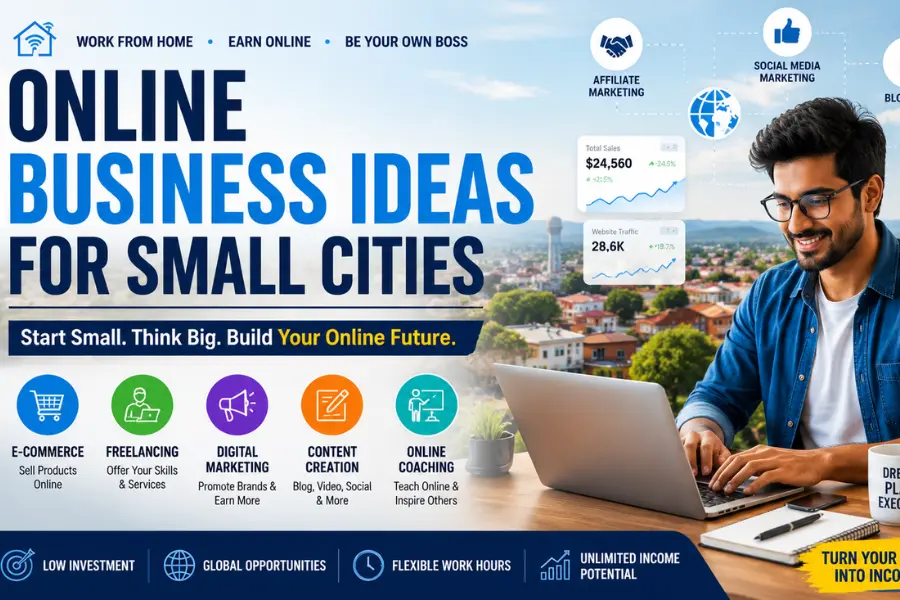
In this guide, you’ll discover profitable online business ideas, learn how to choose the right opportunity, and explore practical strategies for launching and growing a successful online business from a small city.
Understanding the Opportunity in Small Cities
Small cities are no longer limited by their geographic location when it comes to business growth. The rise of digital commerce, remote work, and online services has created countless opportunities for aspiring entrepreneurs to build successful businesses from virtually anywhere. While large cities still offer certain advantages, small-city residents can now compete in national and global markets without relocating.
Why Small Cities Are Becoming Entrepreneurial Hubs
Many entrepreneurs are discovering that small cities offer an ideal environment for starting and growing a business. Lower expenses, reduced competition, and improved internet access have made it easier than ever to launch an online venture.
Lower Living Costs
One of the biggest benefits of living in a small city is the lower cost of living. Expenses such as housing, utilities, transportation, and office space are often significantly lower than in major urban areas. This allows entrepreneurs to invest more money into their businesses rather than covering high personal expenses.
Less Competition Than Major Metropolitan Areas
Large cities are often crowded with businesses competing for the same customers. In contrast, small cities typically have less local competition, making it easier to establish a brand, build relationships, and identify opportunities in underserved markets.
Growing Internet Penetration
Improved internet connectivity has opened new doors for entrepreneurs in smaller communities. High-speed internet, affordable digital tools, and online marketplaces allow business owners to operate efficiently and reach customers regardless of location.
Access to Niche Local Markets
Small cities often have unique products, services, and cultural characteristics that can be transformed into profitable business opportunities. Entrepreneurs can capitalize on niche markets by offering specialized products or solutions that appeal to both local and broader audiences.
Common Challenges Small-City Entrepreneurs Face
Despite the advantages, entrepreneurs in small cities may encounter certain obstacles when starting and growing a business.
Limited Local Customer Base
A smaller population may mean fewer potential customers in the immediate area. Businesses that rely solely on local demand can face growth limitations if they do not expand their reach online.
Access to Skilled Talent
Finding experienced employees, freelancers, or business partners can sometimes be more challenging in smaller communities. Specialized skills may not always be readily available locally.
Logistics and Shipping Concerns
Businesses that sell physical products may face challenges related to shipping costs, delivery times, and supply chain management. Distance from major distribution centers can sometimes increase operational complexity.
Digital Marketing Knowledge Gaps
Many aspiring entrepreneurs have strong business ideas but lack experience in SEO, social media marketing, content creation, or online advertising. Without effective digital marketing strategies, attracting customers can be difficult.
Why Online Businesses Solve These Problems
Fortunately, online business models eliminate many of the barriers traditionally associated with operating from a small city.
Reach Customers Nationwide or Globally
Instead of depending on local buyers, online businesses can target customers across the country or around the world. This dramatically increases market size and revenue potential.
Operate With Lower Overhead Costs
Many online businesses require minimal startup investment and can be operated from home. Lower expenses mean entrepreneurs can focus on growth without the burden of high overhead costs.
Flexible Work Arrangements
Online businesses offer greater flexibility in working hours and location. Entrepreneurs can manage their operations remotely, collaborate with global teams, and serve customers from anywhere with an internet connection.
Scalability Opportunities
Unlike many traditional businesses, online ventures can scale rapidly through automation, digital marketing, and technology. Whether selling products, offering services, or creating digital content, entrepreneurs can grow their businesses without being limited by their city’s population size.
How to Choose the Right Online Business
Choosing the right online business idea is one of the most important decisions you’ll make as an entrepreneur. Not every business model is suitable for every person, so it’s essential to evaluate your skills, interests, budget, and long-term goals before getting started. A business that aligns with your strengths and market demand is more likely to succeed and remain sustainable over time.
Assess Your Skills and Interests
Before investing time and money into a business, take a close look at what you already know and enjoy doing. Your existing abilities can help you get started faster and shorten the learning curve.
Professional Skills
Think about the skills you’ve developed through your job, education, or previous projects. Expertise in areas such as writing, graphic design, programming, marketing, sales, or accounting can be turned into profitable online services or products.
Hobbies and Passions
Many successful businesses start from personal interests. If you’re passionate about fitness, photography, cooking, gaming, or crafts, you may be able to build an audience or create products around those interests. Working on something you genuinely enjoy can also help you stay motivated.
Industry Experience
Your experience in a specific industry can provide valuable insights into customer needs and market opportunities. Whether you’ve worked in healthcare, education, finance, retail, or technology, your knowledge can help you identify profitable business ideas that others might overlook.
Evaluate Market Demand
Even the best business idea needs customers. Before launching, make sure there is enough demand for your products or services.
Keyword Research Basics
Keyword research helps you understand what people are searching for online. Tools such as Google Keyword Planner, Ahrefs, and SEMrush can reveal search volume, competition levels, and popular topics within your niche.
Customer Pain Points
Successful businesses solve problems. Identify the common challenges your target audience faces and determine how your product or service can address them. The more valuable your solution, the easier it becomes to attract customers.
Trend Analysis
Market trends can help you spot growing opportunities before they become highly competitive. Follow industry blogs, social media discussions, and market reports to identify emerging niches and changing consumer behavior.
Determine Your Budget
Your available budget plays a major role in choosing the right online business model. Fortunately, there are opportunities available for almost every investment level.
Low-Investment Opportunities
Businesses such as freelancing, affiliate marketing, blogging, virtual assistance, and content creation can often be started with minimal upfront costs. These models are ideal for beginners with limited capital.
Medium-Investment Businesses
Options like e-commerce stores, social media agencies, and online coaching businesses may require investment in website development, software tools, marketing, and branding, but offer significant earning potential.
High-Growth Scalable Models
Businesses such as Software-as-a-Service (SaaS) platforms, large e-commerce brands, and digital marketplaces often require a higher initial investment. However, they also offer the potential for substantial long-term growth and recurring revenue.
Consider Long-Term Growth Potential
While short-term profits are important, it’s equally important to evaluate how your business can grow over time.
Passive Income Possibilities
Some online business models can generate income even when you’re not actively working. Examples include affiliate websites, online courses, membership sites, and digital products. These businesses can create recurring revenue streams over time.
Automation Opportunities
Technology can help streamline many business operations. Automated email marketing, customer support tools, payment systems, and content scheduling can reduce manual work and improve efficiency as your business grows.
Team Expansion Potential
If you plan to scale your business significantly, consider whether tasks can be delegated to employees, freelancers, or contractors. Businesses with strong team expansion potential are often easier to grow and manage over the long term.
Best Online Business Ideas for Small Cities
The growth of digital technology has created countless opportunities for entrepreneurs living in small cities. Whether you’re looking for a side hustle or a full-time venture, there are many online business models that require minimal investment and can be operated from anywhere.
7 Proven BUSINESS IDEAS for SMALL TOWNS (That STILL Work)

Below are some of the most profitable online business ideas for small-city entrepreneurs.
1. Freelance Services Business
A freelance business is one of the easiest and most affordable online businesses to start. Instead of selling products, freelancers offer professional services to clients worldwide. All you need is a marketable skill, a computer, and a reliable internet connection.
Writing
Businesses constantly need blog posts, website content, product descriptions, email newsletters, and marketing copy. If you have strong communication skills, freelance writing can become a profitable online business with low startup costs.
Graphic Design
Companies, startups, and content creators regularly hire designers for logos, social media graphics, advertisements, and branding materials. Skilled graphic designers can find clients through freelance platforms and direct outreach.
Virtual Assistance
Many business owners need help with email management, appointment scheduling, customer support, and administrative tasks. A virtual assistant business offers flexible work opportunities with minimal investment.
Web Development
Web developers help businesses create and maintain websites. As more companies establish an online presence, the demand for website development services continues to grow.
Digital Marketing
Businesses need experts who can improve their visibility online. Services such as SEO, social media management, content marketing, and paid advertising can generate recurring income while helping clients grow their brands.
2. E-commerce Store
An e-commerce business allows entrepreneurs to sell products online without relying on a physical retail location. With access to global customers, e-commerce remains one of the most scalable online business models.
Selling Local Products Online
Many small cities produce unique goods that can be marketed to a wider audience. Local crafts, specialty foods, handmade items, and regional products can become profitable e-commerce offerings.
Dropshipping Business
Dropshipping allows you to sell products without holding inventory. When a customer places an order, the supplier ships the product directly to the buyer. This business model reduces startup costs and inventory risks.
Print-on-Demand Store
With print-on-demand, custom designs are printed on products such as T-shirts, mugs, phone cases, and hoodies only after a customer purchases them. This eliminates the need for inventory management.
Handmade Products Marketplace
Creative entrepreneurs can sell handmade products through online marketplaces and personal websites. Jewelry, home décor, artwork, and customized gifts are popular categories with strong demand.
3. Affiliate Marketing Website
An affiliate marketing business allows you to earn commissions by recommending products and services from other companies. It is one of the most popular online business models because it doesn’t require you to create your own products.
How Affiliate Marketing Works
Affiliate marketers create content that helps consumers make purchasing decisions. When readers click an affiliate link and make a purchase, the marketer earns a commission from the sale.
Choosing Profitable Niches
Success in affiliate marketing depends heavily on niche selection. Popular niches include technology, finance, health, business, software, and home improvement. Choosing a niche with both demand and commercial intent can significantly improve earnings.
Income Potential
While affiliate marketing often takes time to gain traction, successful websites can generate consistent passive income through search engine traffic, email marketing, and social media promotion.
4. Blogging Business
A blogging business allows entrepreneurs to share expertise, educate audiences, and generate income through multiple monetization channels. It remains one of the most accessible online businesses for beginners.
Content Creation Opportunities
Bloggers can create content around virtually any topic, including business, travel, technology, personal finance, health, education, and lifestyle. Consistently publishing valuable content helps attract readers and build trust.
Monetization Methods
Bloggers can earn revenue through affiliate marketing, display advertising, sponsored content, digital products, memberships, and online courses. Diversifying income sources often leads to greater financial stability.
Building Authority
High-quality content helps establish credibility within a niche. As authority grows, bloggers can attract larger audiences, generate more traffic, and unlock additional revenue opportunities.
5. YouTube Channel
Video content continues to grow in popularity, making YouTube an attractive business opportunity for entrepreneurs in small cities. A successful channel can generate income while building a personal or business brand.
Educational Content
Tutorials, how-to videos, and skill-based training are among the most popular forms of content on YouTube. Educational channels often attract loyal audiences and long-term viewership.
Local-Interest Content
Creators can showcase local attractions, culture, food, events, and businesses. This type of content can help attract both local viewers and people interested in learning about a particular region.
Product Reviews
Consumers frequently search for reviews before making purchases. Honest and informative review videos can generate views, affiliate commissions, and sponsorship opportunities.
Monetization Strategies
YouTube creators can earn money through advertising revenue, affiliate marketing, sponsorships, channel memberships, and digital product sales. As audience size grows, additional income opportunities become available.
6. Online Coaching and Consulting
If you have specialized knowledge or professional experience, online coaching and consulting can be a highly profitable business. This model allows you to help individuals or businesses achieve specific goals while working remotely from a small city.
Business Coaching
Business coaches help entrepreneurs improve operations, marketing strategies, productivity, and growth planning. With more people starting businesses online, the demand for experienced business mentors continues to grow.
Career Coaching
Career coaches assist individuals with job searching, resume writing, interview preparation, and career advancement. This niche is particularly valuable for professionals seeking guidance in competitive industries.
Health and Fitness Coaching
Fitness trainers, nutrition experts, and wellness professionals can provide personalized coaching through video calls, mobile apps, and online communities. This business model offers flexible scheduling and recurring revenue opportunities.
Language Coaching
Language tutors can teach students from around the world using video conferencing platforms. Whether teaching English, Spanish, French, or another language, online tutoring remains a growing market.
7. Social Media Management Agency
Many businesses understand the importance of social media but lack the time or expertise to manage their accounts effectively. A social media management agency helps brands grow their online presence and engage with customers.
Services Offered
Common services include content creation, post scheduling, audience engagement, account management, social media advertising, and performance reporting.
Target Clients
Potential clients include small businesses, local service providers, e-commerce brands, startups, restaurants, and personal brands seeking to increase their online visibility.
Startup Requirements
Starting a social media agency typically requires a computer, internet connection, social media management tools, and a strong understanding of popular platforms such as Facebook, Instagram, LinkedIn, TikTok, and X.
8. Online Course Creation
Creating and selling online courses is an excellent way to turn knowledge into a scalable income stream. Once a course is developed, it can be sold repeatedly with minimal additional effort.
Identifying Expertise
The most successful courses solve specific problems or teach valuable skills. Topics may include business, marketing, technology, personal development, fitness, design, finance, or language learning.
Course Platforms
Entrepreneurs can host courses on platforms such as Udemy, Teachable, and Thinkific, or on their own websites. These platforms make it easy to deliver lessons, track student progress, and process payments.
Marketing Digital Education Products
Successful course creators use content marketing, email marketing, social media, webinars, and SEO to attract students and generate consistent sales.
9. Digital Marketing Agency
A digital marketing agency helps businesses attract customers online through various marketing strategies. As more companies shift toward digital channels, demand for these services continues to increase.
SEO Services
Search Engine Optimization (SEO) helps websites rank higher in search engine results and generate organic traffic. Businesses often hire agencies to improve visibility and attract qualified leads.
Paid Advertising Management
Managing advertising campaigns on platforms like Google, Facebook, and Instagram can be complex. Agencies help clients maximize their advertising budgets and improve conversion rates.
Content Marketing
Content marketing involves creating blogs, videos, social media posts, and other valuable content that attracts and engages potential customers.
Lead Generation
Generating qualified leads is one of the most valuable services a marketing agency can provide. Businesses are often willing to pay premium rates for a reliable source of new customers.
10. Local Business Lead Generation
Lead generation is a business model where entrepreneurs create online assets that attract potential customers and then sell those leads to local businesses.
Creating Websites for Local Industries
Many local industries such as plumbing, roofing, landscaping, cleaning, and home repair rely heavily on customer inquiries. Creating niche websites targeting these services can generate valuable traffic.
Generating Customer Inquiries
Through SEO, paid advertising, and local marketing strategies, lead generation websites can attract people actively searching for specific services.
Selling Qualified Leads
Once inquiries are generated, they can be sold to local businesses on a per-lead basis or through monthly agreements, creating recurring income opportunities.
11. Remote Customer Support Business
As companies increasingly operate online, the need for remote customer support continues to expand. This business can be started independently or as an agency providing support services to multiple clients.
Support Services
Customer support professionals handle email inquiries, live chat assistance, order management, technical support, and customer issue resolution.
Required Skills
Strong communication skills, problem-solving abilities, patience, and familiarity with customer service software are essential for success in this field.
Earning Potential
Income varies depending on experience, industry, and client base. Businesses that specialize in high-quality customer support often secure long-term contracts and recurring revenue.
12. Podcasting Business
Podcasting has become a popular way to build an audience, establish authority, and generate income through audio content.
Building an Audience
Successful podcasts focus on specific topics such as business, entrepreneurship, technology, health, finance, or personal development. Consistent publishing helps attract loyal listeners.
Sponsorship Opportunities
As audience size grows, podcasters can earn revenue through sponsorships, advertising partnerships, affiliate marketing, and premium content offerings.
Content Strategy
A clear content strategy ensures consistency and audience engagement. Interview episodes, educational content, case studies, and industry insights are common podcast formats.
13. Mobile App Development
The mobile app industry continues to offer significant opportunities for entrepreneurs and developers. Apps can solve problems, provide entertainment, or improve productivity.
Opportunities for Developers
Experienced developers can build custom applications for businesses or create their own products targeting specific market needs.
No-Code App Creation
Modern no-code platforms allow entrepreneurs without programming skills to build functional mobile applications using drag-and-drop tools.
Revenue Models
Apps can generate income through subscriptions, advertising, in-app purchases, premium upgrades, or one-time purchases.
14. Subscription-Based Online Business
Subscription models provide predictable, recurring revenue and stronger customer retention than one-time sales.
Membership Communities
Entrepreneurs can create private communities where members receive exclusive content, networking opportunities, coaching, or educational resources.
Premium Content
Subscribers may pay for access to premium articles, videos, courses, newsletters, research reports, or specialized training materials.
Recurring Revenue Advantages
Monthly or annual subscriptions create more stable cash flow, making it easier to forecast income and scale operations over time.
15. Digital Product Business
A digital product business allows entrepreneurs to create products once and sell them repeatedly without inventory or shipping costs.
E-books
E-books are popular digital products that educate readers, solve problems, or provide valuable information within a specific niche.
Templates
Businesses and professionals often purchase templates for resumes, spreadsheets, presentations, social media content, and business planning.
Design Assets
Graphic designers can sell fonts, icons, illustrations, stock graphics, website themes, and branding resources to customers worldwide.
Software Tools
Software products such as productivity tools, calculators, plugins, and web applications can generate recurring revenue and scale to a global audience.
Online Business Ideas Based on Budget
Not every business requires a large investment to get started. In fact, many successful entrepreneurs begin with very small budgets and scale over time. The key is choosing a business model that matches your financial capacity while still offering growth potential. Below are online business ideas categorized by budget level.
Business Ideas Under $100
These are the most affordable ways to start an online business. They usually require only a laptop, internet connection, and basic tools.
Freelancing
Freelancing is one of the fastest ways to start earning online. You can offer services such as writing, graphic design, video editing, or virtual assistance on platforms like Fiverr and Upwork. Since there is no product inventory or setup cost, it is ideal for beginners.
Affiliate Marketing
Affiliate marketing allows you to earn commissions by promoting other companies’ products. You can start by creating a simple blog, social media page, or YouTube channel. The initial cost is minimal, mainly for a domain name and basic hosting if needed.
Blogging
Blogging is a long-term business model where you publish content on a niche topic and monetize it through ads, affiliate links, or digital products. Starting a blog is inexpensive, but it requires consistency and patience to grow.
Virtual Assistance
Virtual assistants help businesses with tasks such as email management, scheduling, customer support, and data entry. You can start offering services directly to clients without any major investment.
Business Ideas Under $500
With a moderate budget, you can start more structured and scalable online businesses that include branding, tools, and marketing.
E-commerce Startup
An e-commerce business allows you to sell physical or digital products online. With platforms like Shopify or WooCommerce, you can set up a store and start selling local goods, print-on-demand items, or niche products.
Social Media Management
Many small businesses need help managing their online presence. With a small investment in tools and learning resources, you can start a social media management service offering content creation, scheduling, and engagement services.
Content Creation Business
Content creators build income through platforms like YouTube, Instagram, or TikTok. With a budget under $500, you can invest in a basic camera, lighting, or editing tools to produce professional-quality content.
Business Ideas Over $500
These business models require higher investment but offer greater scalability and long-term income potential.
Digital Agency
A digital agency provides services like SEO, paid advertising, branding, and web development. With more budget, you can invest in tools, team members, and marketing to attract higher-paying clients.
Online Education Platform
Creating an online learning platform involves building courses, video lessons, and membership systems. This model requires investment in content production, hosting platforms, and marketing strategies.
SaaS Development
Software as a Service (SaaS) is one of the most scalable online business models. It involves creating software products that customers subscribe to on a monthly or annual basis. While it requires technical skills or a development team, it offers strong long-term revenue potential and global reach.
Online Business Ideas Based on Skills
Not everyone starts an online business with the same experience, skills, or available time. That’s why choosing a business idea based on skills can make success much easier and faster. Below are online business ideas for beginners, students, homemakers, professionals, and retirees.
For Beginners
Beginners should focus on low-investment online businesses that are easy to start and require no advanced technical skills.
Freelancing is one of the best online business ideas for beginners, offering services such as writing, data entry, and virtual assistance.
Affiliate marketing is another simple online income opportunity in which you earn commissions by promoting products.
Blogging is a powerful passive income business model that can grow over time through SEO and content creation.
Virtual assistance is also a strong, beginner-friendly work-from-home business that helps companies with daily tasks.
For Students
Students need flexible online business ideas they can manage alongside their studies.
Content creation business on YouTube, Instagram, or TikTok is a popular online earning method for students.
Freelancing for students is highly effective for developing skills such as graphic design, writing, and social media management.
The online tutoring business is another strong student-side income opportunity, especially for teaching school subjects or languages.
Affiliate marketing and blogging are also long-term sources of passive income for students.
For Homemakers
Homemakers often prefer home-based online businesses that provide flexibility and income.
A handmade products online business can be sold through e-commerce platforms and social media.
Social media management services are also a great work-from-home business opportunity.
Home-based cooking or food content business can be turned into a strong online income stream.
Virtual assistant jobs and online selling businesses are also practical home-based earning options.
For Professionals
Professionals can build high-income online consulting and service businesses using their experience.
The online consulting business is one of the most profitable expert-based online income models.
A digital marketing agency is a strong, high-income online business idea for professionals.
Creating an online course business allows professionals to build scalable digital education products.
High-level freelancing services such as development, design, or corporate consulting also generate high income.
For Retirees
Retirees can focus on low-stress online business ideas that use their experience and knowledge.
Blogging business for retirees is a great way to share knowledge and earn passive income.
An online tutoring and mentoring business allows retirees to guide younger generations.
Affiliate marketing for beginners and retirees is a simple way to earn online income.
Creating digital products such as eBooks and guides is also a strong source of passive income for retirees.
Leveraging Local Advantages in Small Cities
One of the biggest strengths of starting an online business in a small city is the ability to leverage local resources, culture, and community to create profitable digital opportunities. Instead of competing only in crowded global markets, entrepreneurs can build unique businesses based on local advantages and then expand their reach online.
Selling Local Products Online
Small cities often have valuable products that are not fully utilized in online markets. By connecting local supply with global demand, entrepreneurs can create strong and scalable businesses.
Regional Crafts
Many small cities are known for handmade crafts such as pottery, textiles, woodwork, embroidery, and traditional artwork. Turning these into an e-commerce business for local products allows artisans to reach customers beyond their region and increase their income.
Agricultural Products
Fresh and organic agricultural products are in high demand online. Fruits, vegetables, honey, dairy products, and dried goods can be sold through online food delivery platforms or branded e-commerce stores. This creates opportunities for farmers and local suppliers to expand their market.
Specialty Foods
Every region has unique foods, snacks, or traditional recipes that can be successful as online food businesses. Packaging, branding, and proper digital marketing can turn local specialties into nationally or even globally recognized products.
Promoting Tourism Through Digital Businesses
Tourism is another powerful opportunity for small-city entrepreneurs. By using digital platforms, local attractions can be promoted to a much larger audience.
Travel Content
Creating travel blogs, YouTube channels, or social media pages focused on local destinations can attract tourists and generate income through ads, sponsorships, and affiliate marketing.
Local Guides
Digital tourism guide businesses can provide detailed information about attractions, routes, food spots, and cultural experiences. These guides can be sold as e-books, websites, or mobile apps.
Tourism Services
Entrepreneurs can also offer online booking services, tour packages, or travel planning assistance. This creates a service-based tourism business that connects visitors with local experiences.
Building Community-Based Online Brands
Strong online businesses can also be built by focusing on community-driven and location-based digital platforms.
Hyperlocal Marketplaces
A hyperlocal online marketplace connects buyers and sellers within a specific city or region. This can include services, products, jobs, and small-business listings, helping to strengthen the local economy while generating revenue through listings or commissions.
Regional Influencer Opportunities
Social media influencers in small cities can build strong personal brands by focusing on local culture, food, lifestyle, and events. As their audience grows, they can earn income through brand partnerships, sponsorships, and affiliate marketing.
By leveraging local business opportunities in small cities, entrepreneurs can create unique online brands that stand out in the digital marketplace while supporting their local economy.
Essential Tools for Running an Online Business
Running a successful online business requires more than just a good idea. You also need the right digital tools to build, manage, and scale your operations efficiently. These tools help you save time, automate tasks, and improve the customer experience, which is especially important for entrepreneurs in small cities starting online businesses.
Website and E-commerce Platforms
A strong online presence starts with a website. It acts as your digital storefront where customers can learn about your products or services.
Popular website-building platforms for online businesses include WordPress, Shopify, and Wix. These platforms allow you to create professional websites without advanced coding skills.
For e-commerce businesses, platforms like Shopify and WooCommerce make it easy to manage products, inventory, and orders. They also support mobile-friendly designs, which are essential for reaching modern customers.
Payment Processing Solutions
Every online business needs a secure and reliable way to accept payments.
Tools like PayPal, Stripe, and local payment gateways allow entrepreneurs to receive payments from customers around the world. These systems support credit cards, debit cards, and digital wallets.
Using trusted online payment solutions helps build customer confidence and ensures smooth transactions, which is critical for business growth.
Marketing Tools
Marketing is the backbone of any successful digital business. Without visibility, even the best product or service will struggle to grow.
SEO tools like Google Search Console, Ahrefs, and SEMrush help you understand keyword performance and improve your website ranking.
Social media marketing tools such as Buffer, Hootsuite, and Canva make it easier to create, schedule, and manage content across multiple platforms.
Email marketing tools like Mailchimp and ConvertKit help businesses build and maintain strong customer relationships through newsletters and automated campaigns.
Customer Relationship Management (CRM) Software
A CRM system helps you manage customer interactions and track sales leads effectively.
Tools like HubSpot, Zoho CRM, and Salesforce allow businesses to organize customer data, monitor communication history, and improve follow-ups.
For small-city entrepreneurs running online service businesses or agencies, CRM tools are essential for maintaining long-term client relationships and increasing repeat sales.
Project Management Tools
As your online business grows, managing tasks and teamwork becomes more important.
Project management tools like Trello, Asana, and ClickUp help you organize tasks, set deadlines, and track progress.
These tools are especially useful for freelancers, agencies, and remote teams, ensuring that projects are completed on time and nothing is missed.
Using the right combination of these online business tools allows entrepreneurs to operate more efficiently, reduce manual work, and scale their businesses faster, even when starting in a small city.
How to Market an Online Business from a Small City
Building a successful online business from a small city is not just about having a good product or service. It also depends heavily on how well you market it. With the right digital marketing strategies, even small-city entrepreneurs can reach national and global audiences.
Search Engine Optimization (SEO)
SEO for online business is one of the most powerful long-term marketing strategies. It helps your website appear in search results when people look for products or services you offer.
By using relevant keywords for your online business, creating high-quality content, and optimizing your website structure, you can attract organic traffic without paying for ads. Blogging, internal linking, and backlink building also play a major role in improving search rankings.
For small-city entrepreneurs, SEO is especially valuable because it allows you to compete with larger businesses on a global scale.
Social Media Marketing
Social media marketing for small businesses is essential for building brand awareness and engaging with potential customers.
Platforms like Facebook, Instagram, TikTok, and LinkedIn allow you to promote products, share content, and build an audience without needing a physical presence in a big city.
Consistent posting, engaging visuals, and storytelling help create trust and visibility. Social media also allows you to connect directly with your target audience and understand their needs.
Email Marketing
Email marketing for online businesses is one of the most effective ways to build long-term customer relationships.
By collecting email subscribers through your website or social media, you can send newsletters, promotions, and valuable content directly to your audience.
Email marketing helps increase repeat sales, build trust, and maintain customer engagement over time, making it a powerful tool for sustainable business growth.
Influencer Collaborations
Working with influencers is a fast-growing digital marketing strategy for online businesses.
By collaborating with social media influencers in your niche, you can reach a larger audience and build credibility quickly. Influencers can promote your products, review your services, or share your brand with their followers.
Even small or local influencers can have a strong impact, especially for small-city businesses targeting regional markets.
Paid Advertising
Paid advertising for online businesses helps you reach targeted customers quickly through platforms like Google Ads, Facebook Ads, and Instagram Ads.
With paid ads, you can define your audience based on location, interests, age, and behavior. This ensures your marketing budget is used efficiently.
Although it requires investment, paid advertising can generate fast traffic, leads, and sales, especially when combined with SEO and social media marketing.
By combining SEO, social media marketing, email marketing, influencer collaborations, and paid advertising, entrepreneurs can build a strong, scalable marketing system for their online businesses in small cities.
Common Mistakes to Avoid in Online Business
Starting an online business can be exciting, especially in a small city where opportunities are growing fast. However, many beginners fail not because their idea is bad, but because they make avoidable mistakes. Understanding these early can save time, money, and effort.
Choosing a Business Without Research
One of the most common mistakes in starting an online business is picking an idea without proper research. Many people make choices based on trends or others’ advice rather than checking actual demand.
Before starting, it is important to study the market, understand your target audience, and analyze competitors. A profitable online business idea always solves a real problem or meets an existing demand.
Ignoring Marketing
Even the best product or service will fail if nobody knows about it. Many beginners focus only on building their business but ignore digital marketing strategies.
Without SEO, social media presence, or advertising, it becomes very difficult to attract customers. Successful entrepreneurs understand that marketing is not optional. It is a core part of building an online business from a small city.
Trying Too Many Ideas at Once
Another major mistake is starting multiple online business ideas simultaneously. This usually leads to confusion, lack of focus, and poor results.
It is better to start with one clear business model, master it, and then expand later. Focus is one of the most important factors in building a successful small business online.
Underestimating Customer Service
Customer service plays a huge role in long-term success. Many new entrepreneurs ignore it, thinking only about sales and profits.
Good communication, fast responses, and problem-solving build trust and repeat business. In the world of online businesses, reputation can directly impact growth and revenue.
Lack of Consistency
Consistency is often the difference between success and failure in an online business. Many people start with motivation but stop after a few weeks or months when they do not see quick results.
Whether it is posting content, running ads, or improving SEO, success requires continuous effort over time. Building a strong online business in a small city requires patience and long-term commitment.
Real Success Stories and Examples
One of the most encouraging aspects of starting an online business from a small city is that success is no longer limited by location. Many entrepreneurs around the world have built profitable businesses from small towns by using digital tools, creativity, and persistence.
Entrepreneurs Who Built Online Businesses from Small Towns
Across different industries, countless individuals have proven that a small city is not a barrier to success.
Some freelancers started from basic home setups and grew into full-time digital service providers, working with international clients in writing, design, and web development.
E-commerce sellers from small towns have turned local products into global brands by using online marketplaces and social media marketing. Handmade crafts, clothing, and regional foods are now being sold far beyond their original communities.
Content creators on platforms like YouTube and Instagram have also built strong personal brands from small cities. By sharing educational content, lifestyle videos, or local culture, they have attracted large audiences and monetized their content through ads, sponsorships, and affiliate marketing.
Even digital agencies have emerged from small towns, offering SEO services, social media management, and online advertising to clients worldwide without needing a physical office in a big city.
Key Lessons from Their Journeys
A common pattern among successful entrepreneurs is not where they started, but how they approached their business.
One major lesson is the importance of starting small but staying consistent. Most successful online businesses did not grow overnight; they were built step by step over time.
Another key lesson is focusing on solving real problems. Whether it is freelancing, e-commerce, or content creation, successful entrepreneurs always provide value to their audience or customers.
Adaptability is also important. Many successful business owners adjusted their strategies multiple times based on market demand, feedback, and performance data.
Finally, learning digital skills such as SEO, social media marketing, and content creation played a crucial role in scaling their businesses.
Practical Takeaways for Beginners
For beginners, the most important takeaway is that starting an online business in a small city is completely achievable with the right mindset and approach.
You don’t need a large investment or a perfect idea to begin. What matters more is choosing a simple business model and taking consistent action.
Start by learning one skill or focusing on one niche instead of trying to do everything at once. Build an online presence, even if it is small at first, and improve it gradually.
Most importantly, treat your online business as a long-term project, not a quick way to get rich. With patience, consistency, and continuous learning, small-city entrepreneurs can compete with anyone in the global digital economy.
Step-by-Step Action Plan for Starting an Online Business
Starting an online business in a small city becomes much easier when you follow a clear roadmap. Instead of guessing what to do next, a structured plan helps you stay focused, avoid mistakes, and build progress step by step.
Month 1: Research and Planning
The first month is all about choosing the right direction for your online business idea.
Start by researching profitable niches and understanding what people are already buying online. Look at competitors, analyze demand, and identify gaps in the market.
During this phase, you should also assess your own skills and decide which online business model suits you best. Freelancing, e-commerce, content creation, or digital services.
Finally, create a simple business plan that includes your niche, target audience, and income goal. This becomes your foundation for everything that follows.
Month 2: Setup and Launch
In the second month, you move from planning to execution.
Set up your online business website or platform, such as a blog, e-commerce store, or social media page. Choose a domain name, create branding elements, and build a basic but professional online presence.
Create your first set of products, services, or content. If you’re freelancing, prepare your portfolio. If you’re running an e-commerce store, list your initial products. If you’re blogging or creating videos, publish your first content.
At this stage, focus on launching quickly rather than achieving perfection.
Month 3: Marketing and Customer Acquisition
Once your business is live, the next step is attracting customers.
Start implementing digital marketing strategies, including SEO, social media marketing, and content creation. Share your business on relevant platforms and start building an audience.
Reach out to potential customers, join online communities, and consistently promote your products or services.
The goal of this month is to generate your first sales, leads, or followers and validate your online business model.
Month 4–12: Scaling and Optimization
After initial traction, focus on growth and improvement.
Analyze what is working and what is not. Improve your website, optimize your marketing campaigns, and refine your product or service based on customer feedback.
This is also the time to explore scaling strategies for online businesses, such as automation, outsourcing, paid advertising, and expanding into new markets.
You can also diversify your income streams by adding new products, services, or content channels.
By the end of this phase, your online business from a small city should be more stable, profitable, and ready for long-term growth.
FAQs
These are some of the most common questions about starting an online business in a small city. The answers below will help beginners understand the basics and take confident first steps.
Yes, you can easily start an online business from a small city. Thanks to the internet, location is no longer a barrier. You can reach customers worldwide using websites, social media, and online marketplaces.
Some of the most profitable online business models include freelancing, e-commerce, digital marketing agencies, affiliate marketing, and online coaching. Profit depends on your skills, niche, and consistency rather than the business type alone.
You can start many online businesses with low investment. Freelancing and affiliate marketing may require less than $100, while e-commerce or agency work may require a few hundred dollars for tools, branding, or marketing.
The best online business for beginners includes freelancing, blogging, virtual assistance, and affiliate marketing. These options require minimal investment and are easier to learn step by step.
Earning time varies depending on the business model. Freelancing can generate income quickly, while blogging, SEO, and affiliate marketing may take a few months to build consistent results. Most online businesses require patience and consistency.
No, you do not need advanced technical skills to start an online business. Many tools today are beginner-friendly. However, learning basic skills such as digital marketing, social media, and content creation can significantly improve your chances of success.
Conclusion
In today’s digital world, location is no longer a barrier to success. Whether you live in a small city or a large metropolitan area, the internet gives you equal access to global customers, markets, and opportunities. What truly matters is not where you start, but how you use digital tools and strategies to grow your online business.
Why Location Is No Longer a Barrier to Success
With the rise of e-commerce platforms, freelancing marketplaces, and social media, entrepreneurs can operate businesses from anywhere. A laptop and internet connection are often enough to build, manage, and scale a successful online business from a small city. This shift has made it possible for individuals in smaller communities to compete globally.
Key Factors That Determine Online Business Success
Success in an online business depends on a few critical factors rather than geography. These include consistency, learning new skills, understanding customer needs, and applying effective digital marketing strategies such as SEO and social media marketing.
Equally important is choosing the right business model and staying focused long enough to see real results. Many people fail not because their idea is bad, but because they give up too early or lack proper execution.
Encouragement to Start with One Focused Business Model
If you are just starting out, avoid trying multiple online business ideas at once. Instead, focus on one model that matches your skills, interests, and budget. Master it step by step before expanding into other areas.
Starting small allows you to learn faster, reduce risk, and build confidence. Over time, you can scale your efforts and diversify your income streams.
Final Thoughts on Building Sustainable Income Online
Building a successful online business in a small city is absolutely possible with patience, consistency, and the right mindset. It is not a get-rich-quick journey, but a long-term process of learning, testing, and improving.
Those who stay committed, adapt to change, and continue to deliver value will eventually build a sustainable online income that is not limited by location or traditional job structures.






- Be Respectful
- Stay Relevant
- Stay Positive
- True Feedback
- Encourage Discussion
- Avoid Spamming
- No Fake News
- Don't Copy-Paste
- No Personal Attacks
- Be Respectful
- Stay Relevant
- Stay Positive
- True Feedback
- Encourage Discussion
- Avoid Spamming
- No Fake News
- Don't Copy-Paste
- No Personal Attacks
