Mobile Paintless Dent Repair: How Professionals Preserve Your Car’s Original Paint
Published: 1 Oct 2026
Even minor damage can still affect your vehicle’s appearance. From a shopping cart to a tight parking space or a minor collision, your car’s body can take an unwelcome mark. Many car owners want to fix these blemishes without repainting the damaged panel or replacing the original part. With mobile paintless dent repair, many minor dents can be fixed without any modifications to the vehicle’s paintwork.
Paintless Dent repair is a metal-reshaping process that uses specialized tools and controlled methods. Unlike traditional body repair, this technique typically avoids sanding, body filler, and repainting. When the damage meets the necessary conditions, a skilled technician can restore the panel’s shape while keeping its original paint intact.
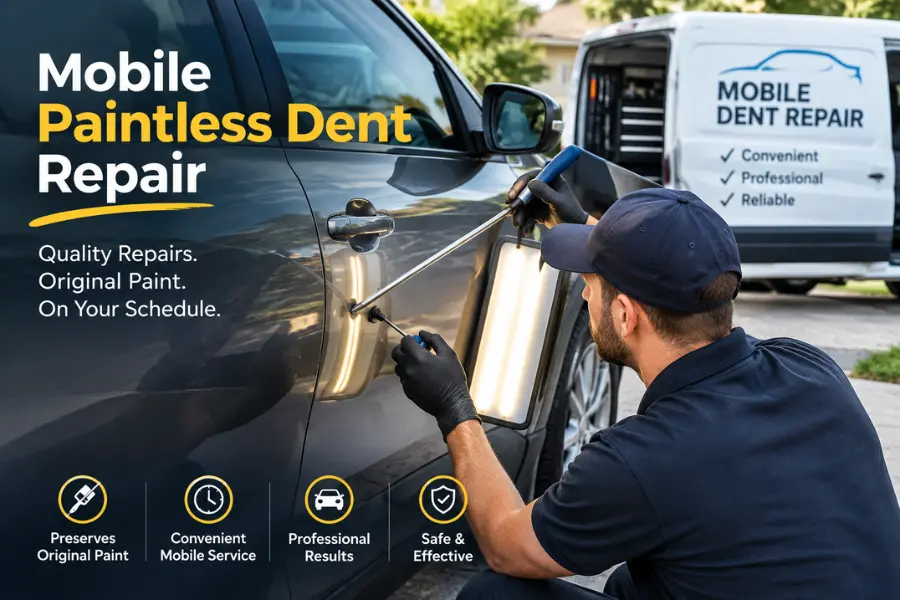
Mobile service brings the repair process to your home, workplace, or another suitable location. Knowing what professionals do helps you determine the right repair for your vehicle.
What Is Mobile Paintless Dent Repair?
Mobile paintless dent repair lets a technician repair a dent without painting the area, if the dent qualifies. Instead of using fillers and fresh paint, technicians carefully reshape the metal with specialized tools to cover the damage.
It’s particularly effective at repairing shallow dents, minor dings in the door, and some types of hail damage. However, it should preserve the original paint as much as possible, and the metal should be suitable for reshaping.
Mobile means the worker comes to you. Depending on the service provider and space available, you can get your car repaired at home or while you work.
A small dent in a car door is a good example of a spot that suits paintless dent repair. It may be necessary to use traditional bodywork repairs for a deep crease that shows cracking paint.
An expert inspection is used to ascertain if the technique is able to achieve the desired outcome without affecting the car’s overall finish.
How Professionals Assess the Damage
Before starting mobile paintless dent repair, technicians carefully inspect the damaged vehicle to determine whether the dent can be repaired without affecting the original paint. This assessment helps them identify the right tools, techniques, and effort needed for a successful result. By evaluating the dent’s characteristics, paint condition, panel material, and accessibility, professionals can develop a suitable repair plan and set realistic expectations for the vehicle owner.
Examining the Dent’s Size, Depth, and Shape
A technician’s first step is to examine the damaged panel and determine the dent’s size, depth, position, and shape. These characteristics help establish how much pressure is needed and which repair methods are most appropriate.
Small, shallow dents are often easier to correct than deep creases or dents with sharp edges. Damage location also matters because dents near panel edges, body lines, or structural reinforcements may require more specialized techniques.
A thorough inspection lets the technician determine whether paintless dent repair (PDR) can effectively restore the panel’s original shape.
Checking the Original Paint Condition
Preserving the vehicle’s original factory paint is a primary objective of paintless dent repair. Before proceeding, technicians look for paint cracks, chips, scratches, peeling, and signs of previous bodywork.
If the paint remains intact and flexible enough to withstand the repair process, PDR may be a suitable option. However, damaged paint can limit the technique’s effectiveness because conventional paintless dent repair reshapes metal without repainting the affected area.
When paint damage is present, the technician may recommend an alternative repair method to achieve a satisfactory finish.
Identifying the Panel Material
The type of metal used in a vehicle’s body panels can influence the repair process. Steel and aluminum panels have different properties, which affect how they respond to pressure and how easily they can be reshaped.
Steel panels are generally more forgiving during certain dent repairs, while aluminum panels can require different tools, techniques, and greater precision. The technician considers these differences before applying pressure to avoid stretching the metal or causing additional damage.
Understanding the panel material helps professionals choose the right approach for mobile dent repair and improves the chances of restoring the panel successfully.
Evaluating the Dent’s Location and Accessibility
A dent’s location can affect how easily a technician can reach the damaged area. Some dents are accessible from behind the panel, while others may be obstructed by interior trim, reinforcement bars, wiring, or other vehicle components.
Technicians assess whether specialized PDR tools can safely reach the affected area. When access from behind the panel is limited, they may use glue-pulling techniques, which involve attaching a special tab to the exterior surface and carefully pulling the dent outward.
This evaluation helps determine the most practical repair method while minimizing the risk of damage to the surrounding paint and bodywork.
Looking for Previous Repairs or Hidden Damage
A vehicle may have undergone earlier bodywork or repainting, which can affect whether paintless dent repair is suitable. Technicians look for signs of repaired panels, uneven paint surfaces, filler, and other indications that the area has been modified previously.
They also consider whether the impact may have caused damage beyond the visible dent. A panel that appears slightly dented from the outside may have additional deformation that requires closer examination.
Identifying these factors early helps technicians avoid unsuitable repair methods and provide a more accurate assessment of the work involved.
Determining Whether Paintless Dent Repair Is Suitable
After examining the dent, paint condition, panel material, and accessibility, the technician determines whether paintless dent repair is the right solution. The decision depends on the overall condition of the damaged area, not just dent size.
Minor dents, shallow creases, and certain hail-related dents may be good candidates when the paint remains intact. However, severe metal stretching, sharp damage, heavily cracked paint, or damage involving structural components may require a different repair approach.
The technician explains the available options, potential limitations, and expected results before beginning the work. This final assessment helps vehicle owners understand what mobile paintless dent repair can realistically achieve and make an informed decision about restoring their vehicle.
How Technicians Prepare the Vehicle
Proper preparation is an essential step in mobile paintless dent repair because it helps technicians work safely, accurately, and efficiently. Before repairing a dent, professionals inspect the surrounding area, clean the affected panel, and determine the best way to reach the damaged metal. They also ensure the vehicle and workspace are suitable for the repair. Careful preparation helps protect the original factory paint, prevent unnecessary damage to nearby components, and achieve a smoother, more consistent result.
Cleaning the Damaged Panel
Technicians may begin by cleaning the damaged area to remove dirt, dust, grease, and debris that could interfere with the inspection or repair. A clean surface makes it easier to examine the dent and identify scratches, paint imperfections, or other signs of damage.
Cleaning is particularly important when technicians use exterior repair methods, such as glue-pulling techniques, because the pulling tabs need a suitable surface to adhere properly. Removing contaminants helps support a controlled repair process and reduces the risk of introducing additional marks.
Creating Safe Access to the Damaged Panel
After cleaning the area, the technician determines how to access the dent. Depending on its location and the vehicle’s design, the repair may require access from behind the panel or from the exterior using specialized paintless dent repair tools.
For example, repairing a dent in a car door may require removing part of the interior door trim to reach the damaged metal. In other situations, technicians can work through existing openings without removing major components.
Choosing the right access method lets professionals apply controlled pressure while minimizing disruption to the vehicle’s interior and exterior.
Protecting Nearby Vehicle Components
Before beginning the repair, technicians take appropriate precautions to protect the vehicle’s surrounding surfaces and components. Depending on the repair method, this may involve using protective covers, appropriate tools, and careful handling.
When technicians work inside a door or another enclosed section, they may need to pay particular attention to interior trim, window mechanisms, electrical wiring, sensors, and adjacent painted panels.
These precautions help reduce the risk of accidental scratches, component damage, and paint imperfections during the repair process.
Setting Up the Mobile Repair Workspace
Because mobile dent repair happens at the customer’s location, technicians need a suitable workspace. A level parking space, enough room around the vehicle, and sufficient lighting make it easier to inspect the damage and use specialized equipment.
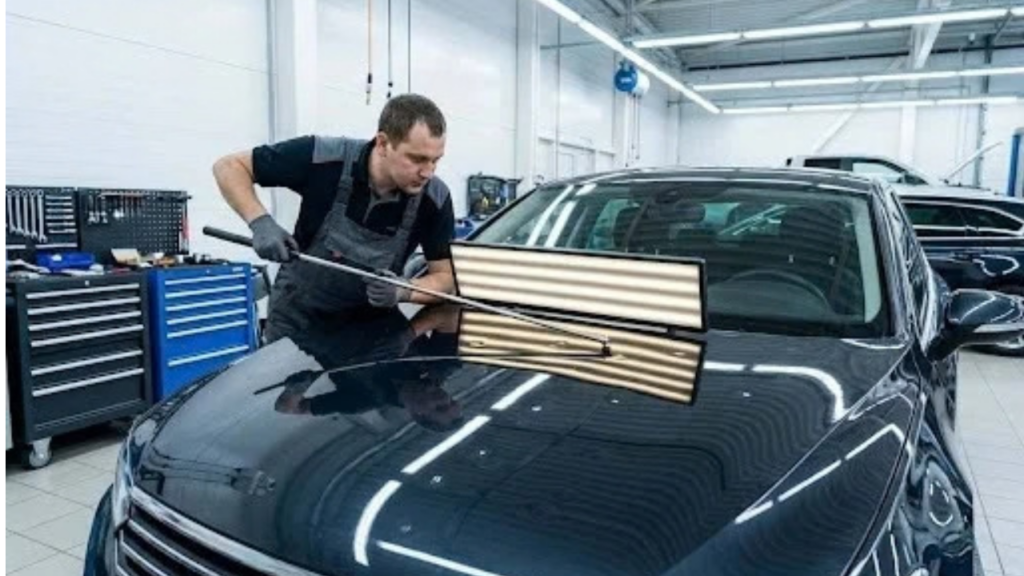
Good lighting is particularly useful for identifying changes in the panel’s contours. Technicians may use reflection boards or dedicated inspection lights to observe the dent and monitor progress throughout the repair.
If weather conditions, poor lighting, or limited space make the work difficult, the technician may recommend rescheduling to a more suitable time.
Checking Tools and Repair Equipment
Before starting work, technicians select tools and equipment suited to the dent’s size, location, and panel material. These may include PDR rods, specialized pushing tools, glue-pulling tabs, pulling bridges, and inspection lights.
Not every repair requires the same equipment. A dent accessible from behind the panel may be treated differently from one where the rear surface cannot be reached.
Checking the tools beforehand helps technicians work more efficiently and choose a method that restores the panel without unnecessary repainting.
Preparing Your Vehicle Before the Appointment
Vehicle owners can also help make a mobile paintless dent repair appointment more efficient by taking a few simple steps before the technician arrives.
- Clear the damaged area: Remove personal belongings and other items that could obstruct access to the dent.
- Provide suitable parking: Choose a level location with enough space for the technician to work around the vehicle.
- Ensure adequate lighting: When possible, park in a well-lit area, especially if the repair is scheduled indoors or in a covered space.
- Share relevant information: Tell the technician about previous repairs, repainting, or any known damage around the affected panel.
- Allow access to the vehicle: If interior trim or other components need to be accessed, make arrangements with the technician before the appointment.
These straightforward preparations can reduce delays and let the professional focus on the repair.
Confirming Readiness Before Repair Begins
Once the vehicle and workspace are prepared, the technician performs a final check to confirm that the damaged area is accessible and the selected tools are suitable. They may also review the expected repair process and explain any limitations identified during the initial inspection.
This final step ensures that the technician is ready to proceed with the most appropriate mobile dent repair technique. Careful preparation supports a more organized workflow, helps protect the vehicle’s original finish, and creates the right conditions for a successful paintless dent repair.
The Tools Professionals Use to Remove Dents
Professional mobile paintless dent repair (PDR) relies on specialized tools designed to reshape damaged vehicle panels without removing the original factory paint. Each tool serves a particular purpose, depending on the dent’s size, depth, location, and accessibility. Technicians combine suitable equipment with controlled pressure and careful observation to gradually restore the metal’s original contours. The right tools and techniques help minimize additional damage and achieve a smooth, natural-looking finish.
Specialized Equipment for Controlled Metal Movement
Paintless dent repair requires equipment that allows technicians to manipulate metal precisely while protecting the surrounding paintwork. The tools selected depend on the damage type, panel material, and whether the dent can be reached from behind or must be repaired from the exterior.
Common equipment includes PDR rods, dent-lifting tools, adhesive pulling tabs, glue-pulling systems, and specialized inspection lights. Each tool helps the technician apply controlled force to a specific area of the damaged panel.
Rather than forcing the metal into position, professionals make small adjustments and repeatedly inspect the surface. This gradual approach helps restore the panel’s shape while reducing the risk of creating additional imperfections.
Paintless Dent Repair Rods and Pushing Tools
PDR rods and pushing tools are commonly used when technicians can access the rear side of a damaged panel. These tools come in different shapes, lengths, and sizes, allowing professionals to reach dents in doors, fenders, quarter panels, and other areas.
The technician carefully positions the tool behind the dent and applies light pressure to push the metal outward. The process requires precision because excessive force can create raised spots or distort the surrounding surface.
For example, a shallow dent in a car door may be corrected by gradually pushing the metal from behind while monitoring the panel’s reflections. The technician continues making minor adjustments until the affected area more closely matches its original contour.
Glue-Pulling Systems and Adhesive Tabs
When accessing the back of a panel is difficult or impractical, technicians may use glue-pulling systems. These systems use specialized adhesive tabs attached to the exterior of the dent and a pulling device to move the metal outward.
Depending on the repair, equipment may include glue guns, pulling tabs, mini lifters, and pulling bridges. The technician selects a suitable tab and applies controlled pulling force to the damaged area.
Glue pulling can help with certain shallow dents and areas with limited rear access. However, the technique is not appropriate for every dent, and the condition of the paint must be considered before adhesive is applied.
Dent-Lifting Tools and Pulling Devices
Dent-lifting tools help technicians apply controlled force to dents that can be treated from the outside of the panel. Depending on the system, these tools may use a lever, bridge, or other mechanism to gradually lift the damaged metal.
Professionals choose the pulling method based on the dent’s shape, depth, and position. The goal is to restore the panel’s contours without unnecessary stretching or creating new high spots.
These tools are particularly useful when combined with careful inspection throughout the process. Technicians adjust the pulling force in small increments rather than attempting to remove the entire dent in one movement.
Specialized Lighting and Reflection Boards
Accurate inspection is essential during paintless dent removal, and specialized lighting helps technicians identify subtle changes in a panel’s surface. PDR lights and reflection boards create visible lines or patterns that change when reflected across a dent.
These reflections help professionals identify high spots, low spots, creases, and areas that still require adjustment. Ordinary lighting may not reveal every minor irregularity, making dedicated inspection equipment valuable during detailed repairs.
Technicians repeatedly check the reflected patterns as they work, using the changes to guide their next adjustments. This process helps them assess the panel’s progress and work toward a more consistent finish.
Protective Accessories and Supporting Equipment
In addition to dent-removal tools, technicians may use protective accessories and supporting equipment to reduce the risk of damage during the repair process.
Depending on the vehicle and dent location, these items may include trim-removal tools, panel protectors, protective covers, and access tools. Some repairs require carefully removing interior trim or other components to reach the back of the damaged panel.
Appropriate accessories protect painted surfaces, interior fittings, and nearby vehicle components while giving the technician the access needed to perform the repair safely.
Why Controlled Pressure and Precision Matter
The right equipment is only part of successful paintless dent repair. Technicians must also understand how much pressure to apply, where to apply it, and how the metal responds to each adjustment.
Excessive pressure can create high spots, distort the panel, or damage the paint, while poorly positioned tools may produce uneven results. Professionals therefore work gradually, checking the surface frequently and making small corrections instead of forcing the metal into place.
For example, a shallow door ding may require careful adjustments around its perimeter before the technician works toward the center. The exact technique depends on the dent’s characteristics and the way the metal has been displaced.
How the Right Tools Improve Repair Results
The right combination of specialized PDR tools, controlled metal movement, and careful visual inspection helps technicians restore damaged panels while preserving intact factory paint. Each tool contributes to a different stage of the repair, from reaching the dent to reshaping the metal and checking the final contours.
Although equipment plays an important role, the technician’s experience and judgment remain essential. By selecting the right tools and making precise adjustments, professionals can fix many dents without the sanding, filling, and repainting associated with conventional bodywork.
How Professionals Reshape Metal Without Repainting
Paintless dent repair (PDR) is a specialized technique that restores a vehicle’s damaged body panels by carefully manipulating the metal while preserving the existing paint whenever the damage is suitable for this method. Instead of sanding the surface, applying body filler, and repainting the panel, technicians use controlled pressure and specialized tools to gradually return the metal to its original shape. This process requires patience, precision, and ongoing inspection to achieve a smooth finish without adding new imperfections.
Restoring the Panel’s Original Contour
The primary stage of mobile paintless dent repair involves gradually moving the displaced metal back toward its original position. When the rear of the damaged panel is accessible, technicians use specialized rods or pushing tools to apply carefully controlled pressure from behind.
They work in small increments rather than attempting to remove the entire dent at once. This method distributes pressure more evenly and reduces the risk of creating raised spots or distorting the surrounding metal.
As the panel begins to recover its shape, the technician repeatedly checks its contours and makes further adjustments where necessary. The objective is to restore the panel’s original appearance while preserving the integrity of the existing paint.
Applying Controlled Pressure to the Damaged Area
Successful dent removal without repainting depends on applying the right pressure to the right areas of the panel. Technicians identify where the metal has moved inward and determine how to gradually correct the deformation.
Applying too much pressure to one spot can create a high spot or make the surrounding metal uneven. For this reason, professionals make small, deliberate adjustments and inspect the results throughout the process.
The required pressure varies with the dent’s depth, shape, location, and the type of metal involved. Careful pressure control helps maintain a more consistent surface and reduces the likelihood of additional damage.
Using Glue-Pulling Techniques for Exterior Access
When a technician cannot easily reach the back of a damaged panel, glue pulling may provide an alternative repair method. This technique involves attaching a specialized adhesive tab to the exterior surface and using a pulling device to move the dented metal outward.
The technician selects an appropriate tab and applies controlled pulling force to the affected area. Once the metal has moved closer to its original position, additional adjustments may be needed to refine the panel’s contours.
Glue pulling can work for certain dents, but it isn’t suitable for every situation. The paint condition, the metal’s characteristics, and the dent’s location all affect whether this technique is appropriate.
Monitoring the Panel with Specialized Lighting
Throughout the repair, technicians use specialized PDR lighting and reflection boards to observe changes in the panel’s surface. These tools create reflected lines or patterns that make dents, raised areas, and subtle distortions easier to identify.
As the metal changes shape, the reflected patterns also change. Technicians use these visual cues to determine which areas need further adjustment and whether the panel is becoming more uniform.
This continuous inspection is important because even a small irregularity can remain visible under certain lighting conditions. By checking the surface throughout the repair, professionals can make more precise corrections and work toward a smoother result.
Correcting High Spots and Low Spots
Reshaping a dent involves more than simply pushing the deepest part of the damage outward. The impact may displace metal around the dent, creating high spots and low spots that need careful correction.
A low spot sits below the surrounding panel surface, while a high spot rises above the intended contour. Technicians assess these differences and make small adjustments to improve the panel’s overall shape.
This stage requires considerable control because correcting one area too aggressively can affect nearby sections. By working gradually and checking the reflections, professionals aim to achieve a balanced surface without introducing new distortions.
Preserving the Original Factory Paint
One of the main advantages of paintless dent repair is that it preserves the vehicle’s original factory finish when the paint remains intact and the damage is suitable for the technique.
Traditional body repair may involve sanding, filling, priming, and repainting the damaged area. PDR generally avoids these steps by reshaping the metal from behind the panel or using controlled exterior pulling methods.
Keeping the original paint helps preserve the vehicle’s factory finish and avoids the color-matching challenges that can come with repainting. However, PDR cannot repair every type of paint damage. Cracked, chipped, or severely damaged paint may require conventional bodywork or another repair solution.
Making Final Adjustments to Achieve a Smooth Finish
After the main dent has been reshaped, the technician carefully examines the repaired area for remaining imperfections. Small adjustments may be needed to improve the panel’s contour alignment and correct subtle high or low spots.
The technician uses inspection lighting to compare the repaired area with the surrounding surface. Depending on the damage, the technician may need several rounds of adjustment and inspection before the result is satisfactory.
This final stage is particularly important for dents located on prominent body lines or highly visible panels, where even minor irregularities can affect the overall appearance.
Factors That Affect the Final Repair Result
Although dent repair without repainting can produce excellent results for suitable damage, several factors affect the outcome. These include the dent’s size, depth, shape, and location; the panel material; the condition of the paint; and the technician’s experience.
Shallow dents with intact paint often suit PDR better than severe creases, stretched metal, or damage near complex panel edges. Steel and aluminum panels may also respond differently to repair techniques.
A skilled technician evaluates these conditions before choosing a method and explains any limitations to the vehicle owner. This assessment sets realistic expectations and ensures preserving the original paint doesn’t come at the expense of a safe, appropriate repair.
Ultimately, mobile paintless dent repair combines specialized tools, controlled metal movement, and detailed inspection to restore many minor dents without conventional repainting. When the damage is suitable and the work is performed correctly, the process can preserve the original finish while returning the panel closer to its intended shape.
Why Preserving Original Paint Matters
Preserving a vehicle’s original paint is a key benefit of mobile paintless dent repair. The factory finish contributes to the vehicle’s appearance, protects the body panels, and can influence how buyers assess its overall condition. When a dent can be repaired without repainting, technicians can restore the panel’s shape while retaining the existing finish. Understanding this approach’s benefits and limitations helps vehicle owners make informed decisions about maintaining their cars.
Maintaining Your Vehicle’s Factory Finish
A vehicle’s original factory paint gives its exterior a consistent color, texture, and appearance. Manufacturers apply it during production, and it becomes part of the vehicle’s overall protective finish.
Traditional dent repair may involve sanding, applying body filler, priming, and repainting the damaged area. Although professional refinishing can restore a damaged panel, perfectly matching the surrounding paint can be challenging because of fading, weather exposure, and differences in application.
When the damage allows, paintless dent repair (PDR) lets technicians reshape the metal without removing or replacing the existing paint. This helps preserve the factory finish and keep the vehicle’s exterior appearance consistent.
Avoiding Unnecessary Sanding and Repainting
One major advantage of dent repair without repainting is that it avoids many refinishing steps associated with conventional bodywork. Instead of sanding the damaged area and applying new paint, technicians use specialized tools to gradually restore the panel’s original contour.
This approach can reduce the need for extra materials and refinishing. It may also shorten the repair process for suitable dents, depending on their size, location, and complexity.
However, PDR is not a universal replacement for conventional repairs. If the impact has cracked the paint, caused substantial metal deformation, or damaged underlying components, you may need additional repair methods.
Maintaining Consistent Color and Texture
Even when repainting is performed professionally, the repaired area may differ slightly from the surrounding finish. Variations in paint formulation, application technique, aging, and sun exposure can affect the final appearance.
Preserving the original paint avoids adding a new coat to the repaired area. When the dent is suitable for PDR, it helps maintain the vehicle’s existing color and surface texture.
This benefit is especially noticeable on highly visible panels, such as doors, hoods, and fenders, where differences in color or finish are easier to spot.
Supporting Your Vehicle’s Resale Appeal
A vehicle’s exterior condition can influence how prospective buyers perceive its maintenance history and overall quality. Keeping the original factory finish intact can help avoid unnecessary repainting and maintain a consistent appearance.
However, preserving the original paint doesn’t guarantee a higher resale value. The impact depends on several factors, including the vehicle’s age, mileage, overall condition, service records, accident history, and buyer preferences.
For owners planning to sell their vehicles, paintless dent repair may be a practical option for correcting eligible dents while retaining the existing finish. Buyers and professional appraisers may still consider the damage and any available repair documentation.
Reducing the Need for Additional Refinishing
Conventional body repair can involve multiple stages, including surface preparation, filling, priming, painting, and clear-coat application. Each stage must be completed correctly to achieve a durable and visually consistent result.
When the paint remains intact, mobile paintless dent repair can eliminate these additional refinishing steps for eligible dents. This may reduce material use and help preserve the vehicle’s existing finish.
Actual time and cost savings depend on the damage and the repair method you choose. More complicated dents may require additional labor, while damage that affects the paint may still need conventional refinishing.
Preserving the Vehicle’s Documented Repair History
Keeping the original paint can help maintain consistency in a vehicle’s documented maintenance and repair history. When a minor dent is corrected without repainting, the owner may avoid adding a paint-refinishing repair to the vehicle’s records.
Nevertheless, original paint alone does not establish that a vehicle has never been damaged. Buyers, inspectors, and appraisers may also consider accident records, panel condition, paint measurements, and other evidence when evaluating a vehicle’s history.
Vehicle owners should keep accurate records of significant repairs and disclose relevant information when required. Paintless dent repair can preserve the finish, but it should not be treated as a substitute for proper documentation.
Understanding the Limitations of Original Paint Preservation
Although retaining the factory finish is desirable, paintless dent repair cannot correct every type of exterior damage. The technique works best when the paint remains intact, and the metal can be reshaped without compromising the panel.
Cracked, chipped, peeling, or severely scratched paint may require additional work. Deep creases, sharply folded metal, extensive stretching, and damage near certain panel edges can also make PDR unsuitable or limit the results.
A qualified technician should inspect the affected area before recommending a repair method. If repainting or conventional bodywork is necessary, choosing the right repair matters more than preserving the original finish at all costs.
Ultimately, preserving factory paint can maintain a vehicle’s appearance and avoid unnecessary refinishing when mobile paintless dent repair suits the damage. A careful assessment helps vehicle owners understand their options and choose a repair approach that balances appearance, durability, and long-term value.
What Affects the Results and Repair Time?
Several factors affect the time required for mobile paintless dent repair and the quality of the final result, including the dent’s size, depth, shape, location, panel material, and paint condition. Some minor dents can be corrected relatively quickly, while more complicated damage may require additional time, specialized tools, and repeated adjustments. Understanding these factors helps vehicle owners set realistic expectations and choose a repair service that prioritizes quality over speed.
The Size, Depth, and Shape of the Dent
The dent’s dimensions play a key role in determining how much work is required. However, dent size alone does not determine repair time. A shallow, rounded dent may be easier to correct than a narrow crease or a deep dent that has significantly displaced the metal.
Small dings and minor door dents may require fewer adjustments, while larger dents can involve a broader area of deformation. Sharp creases may also require more precision because the metal can be harder to reshape evenly.
Technicians assess these characteristics before choosing the right paintless dent removal technique. This evaluation helps them estimate the likely workload and determine whether the damage can be repaired without repainting.
The Location and Accessibility of the Damage
The dent’s position on the vehicle can significantly affect both repair time and technique. Dents in accessible areas are easier to reach, while damage near panel edges, reinforced sections, or complex body lines may require more specialized work.
For example, a dent in the middle of a car door may allow access from behind the panel. However, a similar dent near a structural reinforcement may require additional preparation or an alternative approach.
When rear access is limited, technicians may consider glue-pulling systems or other suitable exterior repair methods. The best approach depends on the vehicle’s construction and the characteristics of the damaged area.
The Type of Metal Used in the Panel
Vehicle panels may be made of steel, aluminum, or other materials, and each responds differently during dent repair. These differences affect the pressure required and the techniques a technician can use.
Steel panels often suit many conventional PDR techniques, while aluminum panels may require more specialized handling because of their different mechanical properties and how they deform.
The technician considers the panel material before applying pressure or selecting tools. This helps reduce the risk of stretching the metal, creating additional high spots, or worsening the damage.
The Condition of the Original Paint
The condition of the original factory paint is another important factor in determining whether a dent can be repaired without repainting. Paintless dent repair generally works best when the finish remains intact and can tolerate the controlled movement needed to reshape the panel.
If the paint is cracked, chipped, peeling, or damaged by a previous repair, the available options may be limited. Even if the metal can be reshaped, additional paintwork may be needed to properly restore the exterior.
Technicians should inspect the finish before beginning the repair and explain whether any paint-related limitations could affect the final result.
Previous Repairs and Hidden Damage
A panel that has undergone previous bodywork may respond differently from one that retains its original condition. Earlier repairs involving body filler, repainting, or metal reshaping can influence how the panel behaves when pressure is applied.
Technicians also need to consider whether the impact has caused damage beyond the visible dent. In some cases, the deformation may extend into surrounding areas or affect components behind the panel.
Identifying these issues early helps determine whether mobile dent repair is appropriate and reduces the likelihood of unexpected complications during the appointment.
The Technician’s Experience and Repair Technique
The technician’s skill and experience can affect the repair’s efficiency and quality. Paintless dent removal requires an understanding of metal movement, suitable tool selection, pressure control, and surface inspection.
An experienced professional can assess the damage, identify the best access points, and choose techniques suited to the vehicle’s panel. They also know when to stop making adjustments or recommend another repair method if PDR is unlikely to achieve an acceptable result.
Choosing a technician based on experience, careful assessment, and transparent communication helps you understand the expected outcome instead of focusing only on the lowest price or fastest completion time.
The Tools and Equipment Required
The tools needed for a repair can affect how much preparation and adjustment time is involved. Technicians may use PDR rods, pushing tools, adhesive tabs, pulling bridges, or specialized inspection lights, depending on the dent’s location and nature.
Some repairs require access behind the panel, which may involve carefully removing interior trim or other components. Others can be completed using exterior pulling methods.
The right equipment helps technicians work with greater control, but complex dents may still require multiple rounds of adjustment and inspection to achieve a satisfactory finish.
How Long Does Mobile Paintless Dent Repair Take?
Mobile paintless dent repair time varies according to the damage and vehicle design. A minor, accessible dent may take less than an hour, while more complex dents can require several hours or longer. These are general examples, not guaranteed timeframes, and some repairs may require a follow-up appointment.
Before providing an estimate, the technician should consider the dent’s depth, location, accessibility, panel material, paint condition, and the number of damaged areas.
Because the service is mobile, the technician may also need suitable parking space, adequate lighting, and enough room to work safely around the vehicle. Confirming these arrangements in advance can help prevent avoidable delays.
Questions to Ask Before the Repair Begins
Before booking mobile paintless dent repair, ask the technician a few practical questions to understand the expected time and results:
- Can this dent be repaired without repainting? Ask whether the existing paint and panel condition are suitable for PDR.
- How long will the repair take? Request an estimate based on an inspection of the actual damage.
- Will you need to remove any vehicle components? Find out whether interior trim or other parts may need to be accessed.
- What limitations could affect the final result? Ask whether any visible imperfections may remain after the repair.
- Is the quoted price based on the inspected damage? Confirm what the estimate includes and whether additional work could change the cost.
Clear answers to these questions help you compare services and understand the repair process before committing.
Ultimately, the best repair decision balances quality, a reasonable completion time, and preserving the original paint. A thorough assessment and honest estimate help you know what to expect and ensure the chosen repair method fits your vehicle.
Mobile paintless dent repair can also be an interesting option for entrepreneurs exploring high-profit service business ideas. Before starting this type of business, evaluate training requirements, equipment costs, local demand, and competition.
Conclusion
Mobile paintless dent repair gives vehicle owners a convenient way to address many minor dents while preserving their car’s original paint. Professionals inspect the damage, choose the right tools, access the affected panel, and gradually reshape the metal to restore its original contour.
The method can avoid the sanding, filling, and repainting associated with conventional bodywork. However, the results depend on the dent’s depth, location, paint condition, and the type of metal involved. A professional assessment is essential before choosing this repair option.
If your vehicle has a door ding, shallow dent, or qualifying hail damage, mobile paintless dent repair may help restore its appearance without changing the factory finish. Contact a qualified technician to inspect the damage, discuss your options, and determine whether paintless dent repair is right for your vehicle.
FAQs
If you are considering mobile paintless dent repair, you may have questions about how the process works, whether it can preserve your car’s original paint, and how long the repair might take. The following frequently asked questions explain the key details to help you understand the process and make an informed decision.
Yes. Paintless dent repair (PDR) can preserve your car’s original factory paint when the dent is suitable for this technique and the repair is performed correctly. Instead of sanding the damaged area, applying body filler, and repainting the panel, technicians use specialized tools to gradually reshape the metal while retaining the existing finish.
However, the paint must generally be intact and able to withstand the repair process. The technician should inspect the damaged area before deciding whether PDR is appropriate.
Factors that help determine whether the original paint can be preserved include:
- Paint condition: The finish should generally be free from significant cracks, chips, and peeling.
- Dent characteristics: Shallow dents and rounded dings are often suitable for PDR.
- Panel material: Steel and aluminum may require different repair techniques.
- Technician experience: Proper tool selection and controlled pressure help reduce the risk of additional damage.
When these conditions are favorable, mobile paintless dent repair can restore the panel’s shape without conventional repainting.
No. Although paintless dent repair works well for many minor dents, it cannot correct every type of vehicle damage. The technique’s suitability depends on impact severity, paint condition, the amount of metal deformation, and the dent’s location.
Some dents may be too severe or may have damaged the paint or underlying components, making conventional body repair a more appropriate option.
Technicians generally consider the following factors:
- Deep dents: Severe deformation may make it difficult to restore the panel’s original contour.
- Sharp creases: Narrow, sharply defined dents can require more complicated repairs and may not always be suitable for PDR.
- Cracked or chipped paint: Damaged paint may require refinishing even if the metal can be reshaped.
- Stretched metal: Significant stretching can limit how closely the panel can be restored.
- Structural damage: Damage involving structural components requires appropriate professional assessment and may fall outside the scope of PDR.
A qualified technician should inspect the vehicle and explain the available repair options. Choosing the right method matters more than avoiding repainting at all costs.
Yes. Many mobile paintless dent repair services let vehicle owners repair eligible dents at home, at work, or another suitable location. Instead of taking your vehicle to a traditional body shop, you arrange for a technician to bring the necessary tools and equipment to you.
However, the repair site must provide suitable working conditions. Some dents may also require access to the inside of a panel or the removal of certain vehicle components.
Before scheduling an appointment, consider these requirements:
- Adequate space: The technician needs enough room to work safely around the damaged panel.
- Suitable parking: A level parking area can make positioning the vehicle and equipment easier.
- Good lighting: Proper lighting helps the technician inspect the dent and monitor the repair.
- Weather protection: Rain, strong wind, or extreme conditions may make an outdoor workspace unsuitable.
- Vehicle access: The technician may need access to the interior or rear side of the damaged panel.
Before booking, confirm whether the technician can complete the repair at your preferred location. If the site is unsuitable, you may need an alternative workspace or to arrange a different appointment.
The time required for mobile dent repair depends on the dent’s size, depth, shape, location, and complexity. A small, accessible door ding may take less than an hour, while a larger or more complicated dent can require several hours or longer. These are general examples, not guaranteed timeframes.
Some repairs also require additional preparation, specialized tools, or the careful removal of interior trim to reach the damaged area.
The following factors can influence repair time:
- Dent size and depth: Larger or deeper dents often require more adjustments.
- Dent location: Damage near panel edges, body lines, or reinforcements can be harder to access.
- Panel material: Steel and aluminum may require different techniques and handling.
- Paint condition: The technician must determine whether the finish can withstand the repair.
- Number of dents: Repairing several dents can take longer than correcting a single minor ding.
- Access requirements: Removing and reinstalling trim or other components may add time.
The best way to obtain a reliable estimate is to have the technician inspect the damage before starting work. Ask whether the repair can be completed during one visit and whether any limitations could affect the final result.
Yes. Paintless dent repair can be used on certain aluminum panels, provided the damage and paint condition are suitable. However, aluminum behaves differently from steel, so technicians must choose the right tools and techniques.
Aluminum panels may require more specialized handling because they deform differently than steel. The technician must carefully control the pressure applied to avoid creating additional imperfections or worsening the damage.
Important considerations when repairing aluminum panels include:
- Panel characteristics: The technician must account for how the aluminum responds to pressure.
- Dent severity: Minor dents may be suitable, while severe creases or extensive deformation can be more difficult to correct.
- Paint condition: The finish must be evaluated to determine whether it can be preserved.
- Specialized equipment: Appropriate PDR tools and inspection lighting help support precise adjustments.
- Technician expertise: Experience with aluminum body panels matters when choosing the right repair approach.
Not every aluminum dent can be repaired successfully using PDR. A professional inspection helps determine whether paintless dent repair is appropriate or whether another repair method is needed.
For suitable dents, mobile paintless dent repair can conveniently restore a vehicle’s appearance while preserving the original factory paint. It may also reduce the need for sanding, body filler, and repainting associated with conventional dent repair.
Whether it is the right choice depends on the damage, the expected result, and the service provider’s assessment.
Before making a decision, consider the following:
- Repair suitability: Confirm that the dent can be corrected using PDR.
- Expected results: Ask whether any visible imperfections may remain.
- Cost and timing: Request a clear estimate based on the actual damage.
- Technician experience: Choose a professional who can explain the proposed method and its limitations.
- Convenience: Check whether your home or workplace provides a suitable repair environment.
By considering these factors, vehicle owners can decide whether to repair minor dents without unnecessary repainting.
Choosing the right paintless dent repair service starts with understanding your vehicle’s damage and the repair options available. Consult an experienced technician to determine whether PDR suits your car, set realistic expectations, and choose an approach that restores your vehicle’s appearance while preserving its original finish whenever possible.






- Be Respectful
- Stay Relevant
- Stay Positive
- True Feedback
- Encourage Discussion
- Avoid Spamming
- No Fake News
- Don't Copy-Paste
- No Personal Attacks
- Be Respectful
- Stay Relevant
- Stay Positive
- True Feedback
- Encourage Discussion
- Avoid Spamming
- No Fake News
- Don't Copy-Paste
- No Personal Attacks
