Mobile Paintless Dent Repair: How Professionals Preserve Your Car’s Original Paint
Published: 1 Oct 2026
Even if the damage to the vehicle appears to be nothing serious, it can have an impact on the look of the vehicle. From the shopping cart to a tight parking space, or a minor collision, your car’s body can take an unwelcome mark. Numerous car owners wish to remedy these blemishes without having to repaint the damaged panel or replace the original part. With mobile paintless dent repair, many minor dents can be fixed without any modifications to the vehicle’s paintwork.
Paintless Dent repair is a process of metal reshaping that employs special tools and controlled methods. This technique typically does not involve sanding, body filling, or repainting methods as would traditional body repair. When the damage meets the necessary conditions, a skilled technician can restore the panel’s shape while keeping its original paint intact.
Mobile service provides convenience, which brings the repair process to your home, workplace or other appropriate setting. It helps to know a bit about the type of work the professionals perform to determine the type of repair that’s suitable for your vehicle.
What Is Mobile Paintless Dent Repair?
Mobile paintless dent repair is the ability of a technician to perform a dent repair without taking the time to paint the repair area if the dent is qualified. Instead of using fillers and fresh paint, the technicians take great care to reshape the metal with specialized tools to cover up the damages.
It’s particularly effective at repairing shallow dents, minor dings in the door and some types of hail damage. The original paint however, should be maintained as much as possible and the metal should be appropriate for reshaping.
Mobile refers to the worker coming to you. Depending on the service provider and space available in the work environment, you can get your car repaired at home or while working.
A small dent from a car door is a good example of a spot that is a good fit for paintless dent repair. It may be necessary to use traditional bodywork repairs for a deep crease that shows cracking paint.
An expert inspection is used to ascertain if the technique is able to achieve the desired outcome without affecting the car’s overall finish.
How Professionals Assess the Damage
Examining the Dent and Original Paint
A technician’s first step in the repair is to review the damaged panel to determine the nature and severity of the damage. The inspection involves the depth, width, position and shape of the dent. These details assist in deciding upon the proper tools and techniques to use.
Another focus of the technician’s exam is the paint, looking for cracks, chips, scratches, and previous repairs. One of the primary objectives of paintless dent repair is to preserve the original paint and its condition plays a major role in the options available.
The process can also be affected by the type of metal can. The different properties of steel and aluminum panels mean that it is necessary to use a different approach when applying pressure.
For example, if the door is steel, and a small dent can be repaired with ease. The technique required for a similar dent in an aluminum panel might be another one.
Once the damage is estimated, the technician will let the owner know if paintless dent repair is a good option, and if there are restrictions. This step is used to help set realistic goals before work is started.
How Technicians Prepare the Vehicle
Creating Safe Access to the Damaged Panel
With proper preparation, technicians will be able to work accurately without damaging the surrounding paint and vehicle parts. To remove dirt, dust or debris that could interfere with the inspection or repair, the technician may clean the damaged area.
The next step is for the technician to determine how to access the dent. This could be through access to the rear of the panel or from the external side using specialist equipment.
For instance, if you have a dent in your car door, you might need to take some of the interior door trim out of your door. You might not need to open up as much for an accessible exterior panel with a dent or ding.
Mobile techs require an appropriate work area also. The process can be easier if a level parking place is available with ample room and lighting.
Prior to the appointment move personal belongings away from damaged area and allow technician to access vehicle. The following simple preparations can facilitate the repair.
The Tools Professionals Use to Remove Dents
Specialized Equipment for Controlled Metal Movement
Paintless dent repair requires special tools to manipulate without damaging the paint job on vehicle panels. The type of equipment used depends on the nature, size and location of the dent.
Typically, they will use metal rods, dent lifting tools, special tabs, or controlled pulling systems. Adhesive systems can then be used to pull some dents outwards from the surface while rods can be used to push some dents from behind the panel.
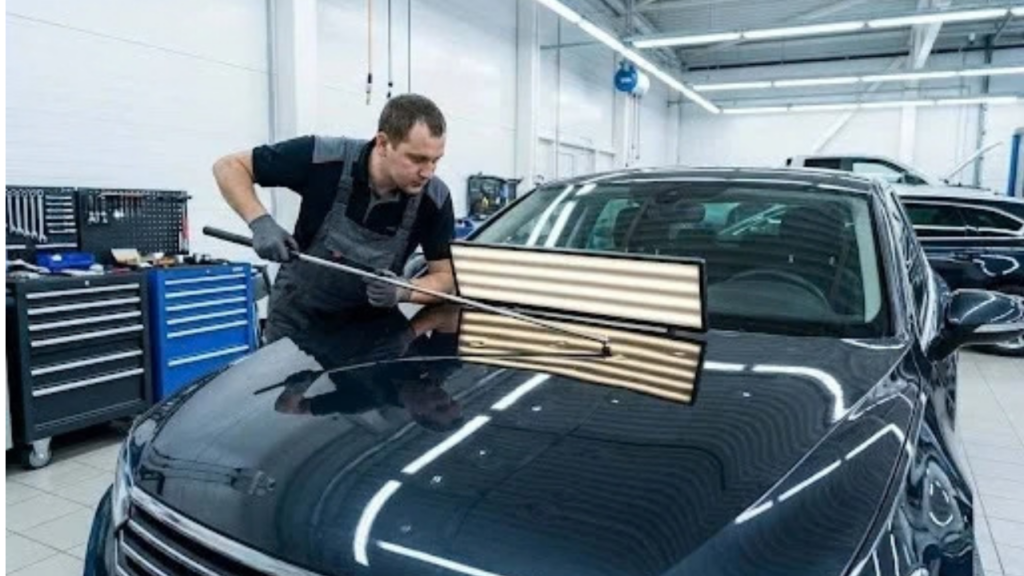
Special lighting can also be used to detect minute changes in the shape of the panel. Reflections are used to help them determine high and low spots and still areas.
Pressure is important as too much may produce further defects or strip the paint over. The professionals proceed slowly, making incremental changes instead of forcing.
For instance, a shallow ding in the door might require light pressure around the perimeter before the door’s middle takes shape again.
Using the proper equipment, controlled movement and close observation allows technicians to obtain a consistent finish.
How Professionals Reshape Metal Without Repainting
Restoring the Panel’s Original Contour
The primary repair phase is to slowly push the broken metal back into its original position. If the panel is accessible to the back, technicians apply carefully controlled pressure to the back in order to lift the panel.
They operate in the dent in small increments. By this way it will make it easier to avoid the metal getting too far in one place to create a raised spot.
If the dent is in the vehicle’s exterior, the techs can place special adhesive tabs and use a pulling system to raise the dented area. Afterwards, they make further adjustments to the surface.
Technology throughout the process is closely watching the panel lighting. This enables them to detect minute irregularities that otherwise might not be noticeable.
The purpose is to re-form the panel in such a way as to preserve any existing paint. The technique does not involve conventional sanding, filling and repainting of the vehicle, so that its original finish is retained if the damage is not appropriate.
However, this is dependent on the condition of the metal, the size of the dent, and the skill of the technician.
Why Preserving Original Paint Matters
Maintaining Your Vehicle’s Factory Finish
The original paint on a vehicle helps to give the car its look, and helps to protect the body panels. A traditional dent repair might involve sanding, filling and repainting the dented area.
While the professional re-painting process can save a damaged panel, the re-pained area may not match the rest of the paint in color, texture or finish. This will depend on the condition of the vehicle and quality of the work performed.
When the damage is small enough, Paintless dent repair does not require these refinishing processes. Technicians can modify the existing metal without covering it with a different paint to retain the factory paintwork.
Maintaining the original paint may also prove beneficial for sustainment in cases of needed maintenance to the vehicle’s documented repair history. The impact on resale value, however, will vary based on the condition, the car and the buyer.
Remember that all scratches or paint damage are not repairable with paintless dent repair techniques. If the finish is already cracked or chipped, further repair work may be required.
What Affects the Results and Repair Time?
Several factors influence how long mobile paintless dent repair takes and how closely the technician can restore the original appearance.
The dent’s size matters, but depth and shape are equally important. A shallow, rounded dent may require less work than a narrow crease, even if both cover a similar area.
Location also affects the process. Dents near panel edges, reinforced sections, or complex body lines can be harder to access and reshape.
The panel material and paint condition further influence the repair. Previous bodywork may also affect how the metal responds to pressure.
A technician can usually provide a more useful time estimate after inspecting the damage. Ask whether the repair can be completed during one visit and whether any limitations may remain.
Choosing a service based on careful assessment, clear communication, and appropriate repair techniques helps you understand what to expect before work begins.
Conclusion
Mobile paintless dent repair gives vehicle owners a convenient way to address many minor dents while preserving their car’s original paint. Professionals inspect the damage, select suitable tools, access the affected panel, and gradually reshape the metal to restore its original contour.
The method can avoid the sanding, filling, and repainting associated with conventional bodywork. However, the results depend on the dent’s depth, location, paint condition, and the type of metal involved. A professional assessment is essential before choosing this repair option.
If your vehicle has a door ding, shallow dent, or qualifying hail damage, mobile paintless dent repair may help restore its appearance without changing the factory finish. Contact a qualified technician to have the damage inspected, discuss your options, and determine whether paintless dent repair is suitable for your vehicle.
Frequently Asked Questions
Can paintless dent repair preserve my car’s original paint?
Yes. When the dent qualifies and the technician performs the repair correctly, paintless dent repair can preserve the original factory paint. The paint generally needs to be intact before the repair begins.
Can professionals remove every dent without repainting?
No. Deep dents, sharp creases, severely stretched metal, and damage involving cracked paint may require conventional body repair or repainting. A technician must inspect the damage to determine the appropriate method.
Is mobile paintless dent repair available at home?
Many mobile technicians offer repairs at homes, workplaces, and other suitable locations. The site must provide safe working conditions, enough space, and access to the damaged panel.
How long does mobile paintless dent repair take?
Repair time depends on the dent’s size, depth, location, and complexity. A small door ding may take less time than a large dent or one that requires panel disassembly. Ask the technician for an estimate after the inspection.
Does paintless dent repair work on aluminum panels?
Yes, technicians can repair certain dents in aluminum panels using appropriate techniques. However, aluminum behaves differently from steel, so the repair requires suitable tools and careful handling.






- Be Respectful
- Stay Relevant
- Stay Positive
- True Feedback
- Encourage Discussion
- Avoid Spamming
- No Fake News
- Don't Copy-Paste
- No Personal Attacks
- Be Respectful
- Stay Relevant
- Stay Positive
- True Feedback
- Encourage Discussion
- Avoid Spamming
- No Fake News
- Don't Copy-Paste
- No Personal Attacks
