Understanding the Power of Leadership Insights in Business
Updated: 7 Sep 2026
Leadership is the cornerstone of business success. Strong leadership is more crucial than ever in today’s fast-paced and rapidly evolving business environment. Leaders shape the direction of their organizations, drive innovation, and cultivate a culture that fosters employee engagement and drives organizational growth.
This article examines key leadership insights in business, from defining leadership to understanding the various leadership levels within an organization and addressing leadership challenges in the 21st Century.
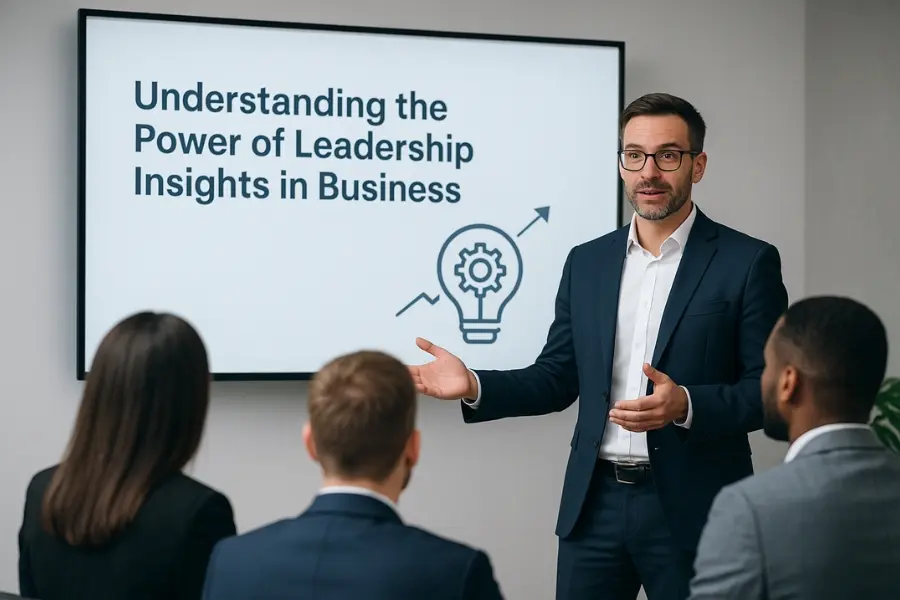
Leadership Insights in Business
Strong leadership is the foundation of every successful business. Great leaders inspire their teams, create a shared vision, and guide the organization toward its goals. Leadership insights help identify strengths and areas for improvement, allowing businesses to thrive even in challenging environments.
Effective leadership goes beyond giving instructions. It’s about understanding people. Leaders who communicate clearly, listen actively, and show empathy build trust and loyalty within their teams. This human connection drives motivation, creativity, and overall productivity.
Adapting leadership strategies to modern business challenges is essential for long-term success. From embracing innovation to managing diverse teams, leadership insights provide valuable lessons that help businesses grow, evolve, and stay competitive in today’s dynamic marketplace.
What is Leadership in Business?
Business leadership entails guiding an organization toward achieving its objectives. Unlike management, which focuses on processes and control, leadership is about vision, inspiration, and motivating others to achieve shared goals. Effective leadership drives innovation, fosters motivation, and cultivates an environment that encourages employees to grow and develop.
In business, leadership is crucial for steering the company in the right direction. Strong leadership cultivates trust and accountability, where every member understands their role in achieving the company’s vision.
Leadership Levels in an Organization:
In any organization, leadership is structured across various levels:
Frontline Leaders:
These leaders work directly with employees, ensuring daily operations run smoothly and that team goals are met.
Mid-Level Managers:
They bridge the gap between frontline leaders and senior executives, manage multiple teams, and play a critical role in strategic implementation.
Senior Executives:
At this level, leaders focus on overall company strategy, making large-scale decisions, and setting long-term objectives.
C-Suite Leaders (CEO, CFO, etc.):
The highest leadership level is responsible for making strategic decisions that affect the entire organization.
Effective leadership evolves with these levels. What works at one stage may not be suitable at another, requiring adaptability and clear communication across all levels of leadership.

Don’t let this moment slip by, Let yourself feel and enjoy & Start your own business Today.
Click Here7 Key Insights into Effective Leadership:
Here are seven essential insights for effective leadership:
1. Visionary Thinking:
Successful leaders can craft and communicate a compelling vision for the organization’s future. This clear direction motivates employees to work toward a common goal.
2. Empathy & Emotional Intelligence:
Understanding employees’ feelings, showing compassion, and creating an emotionally supportive work environment strengthen relationships and boost team morale.
3. Decision-Making Under Pressure:
Effective leaders must make sound decisions, even under pressure. Whether navigating a crisis or responding to unexpected challenges, these decisions shape the company’s future.
4. Adaptability:
In today’s ever-evolving business world, adaptability is crucial. Leaders must be open to new ideas and encourage their teams to embrace change and innovation.
5. Clear Communication:
A great leader excels in communication. They articulate clear goals, provide constructive feedback, and ensure that all team members understand expectations.
6. Integrity and Trustworthiness:
Trust is the foundation of any relationship. Leaders must maintain high ethical standards to ensure a culture of integrity and transparency.
7. Accountability:
Leaders should hold themselves and their teams accountable for their actions and outcomes, promoting a sense of ownership and responsibility within the organization.
3 Types of Team Members You NEED to Hire and How to Manage Them

Leadership Dashboard Examples:
A leadership dashboard is a powerful tool that enables leaders to track key performance indicators (KPIs) and assess the overall health of their organization. These dashboards provide valuable insights into metrics such as:
Employee Engagement:
Monitoring employee satisfaction, retention, and productivity.
Revenue Growth:
Measuring financial performance and identifying trends.
Customer Satisfaction:
Gauging how well the business meets customer expectations.
Tools like Tableau or Microsoft Power BI are examples of leadership dashboards. These allow business leaders to visualize data and make informed decisions based on real-time insights.
Leadership Challenges in the 21st Century:
In the 21st Century, leadership is not without its challenges. Some of the pressing issues include:
Managing Remote Teams:
With the rise of hybrid and remote work models, maintaining engagement, communication, and productivity has become more complex.
Fostering Diversity and Inclusion:
Modern leaders must navigate the growing demand for diverse, inclusive, and equitable workplaces.
Technological Advancements:
Rapid technological change requires leaders to stay ahead of the curve and adapt their strategies to integrate new technologies.
By addressing these challenges, leaders can maintain a strong organizational culture and drive long-term success.
The Role of a Business Leader:
Business leaders wear many hats. On a day-to-day basis, they balance strategy, execution, and innovation. They ensure the company stays true to its vision while adapting to market shifts. Business leaders also play a key role in aligning their teams with organizational goals, fostering a positive work environment, and maintaining company values.
Effective leaders continuously assess and improve their teams’ performance, ensuring each team member contributes to the company’s success.
Why Leadership Matters in Business:
Leadership is the driving force behind business success. It influences company culture, employee morale, and the bottom line. Studies show that businesses with strong leadership experience higher employee engagement, increased productivity, and more significant innovation.
Effective leadership makes employees more likely to feel motivated, valued, and connected to the company’s mission. As a result, these companies are more likely to experience growth and profitability.
Leading with Insight: What Does It Mean?
Leading with insight means combining experience, knowledge, and forward-thinking strategies to guide the company. Leaders with insight are proactive. They anticipate market shifts, listen to employees, and make data-driven decisions.
Insightful leaders foster an environment of continuous learning and reflection. They rely on information, trends, and feedback to make decisions that move the business forward.
Leading with insight also requires emotional intelligence and a commitment to learning from successes and failures. It’s about remaining open to new ideas and adapting strategies to meet the challenges of a rapidly changing business world.
Advantages and Disadvantages
Here are the Advantages and Disadvantages of Leadership Insights in Business:
Advantages of Leadership Insights in Business
Better Decision-Making
Leadership insights enable leaders to make informed choices by understanding the market trends and the dynamics within their teams. This leads to decisions that support the company’s goals and facilitate its growth.
Improved Company Culture
Leaders can create a positive work environment with leadership insights where everyone feels valued. This makes employees happy and motivated, which in turn leads to improved performance and reduced turnover.
More Innovation and Flexibility
Leadership insights enable leaders to identify emerging ideas and market trends. By staying ahead, leaders can encourage their teams to be creative and flexible, helping the company adapt to new trends.
Empowered Employees
Leaders can offer the proper support when they understand their team’s strengths and weaknesses through leadership insights. This makes employees feel more confident and engaged in their work.
Clearer Communication
Leadership insights enable leaders to communicate more effectively with everyone in the company. When leaders understand how to connect with different groups, it ensures that everyone is working toward the same goals.
Quicker Conflict Resolution
With leadership insights, leaders can identify problems early and address them before they escalate into more significant issues. This helps maintain a peaceful and focused work environment.
Disadvantages of Leadership Insights in Business
Too Much Focus on Data
While data-based leadership insights are helpful, focusing solely on numbers can cause leaders to overlook their people’s feelings and needs, making decision-making less personal and less effective.
Risk of Bias
Leadership insights can be influenced by a leader’s experiences and opinions, which may not always be the best way to make decisions. This can lead to biased choices that don’t fully consider all perspectives.
Resistance to Change
Some leaders may resist new insights because they are accustomed to doing things in a similar manner. This can prevent the company from growing or improving, as leaders may be unwilling to try new methods or ideas.
Making Things Too Complicated
Sometimes, leadership insights can make things seem too complex. If leaders fail to simplify, their ideas can confuse employees and hinder progress.
Using Insights the Wrong Way
Leadership insights are helpful, but they can lead to mistakes if not applied appropriately. If leaders misinterpret or misuse their insights, it can harm decision-making and the company’s performance.
Focusing on Short-Term Goals
Sometimes leaders focus too much on quick solutions based on their own insights. This might help in the short term, but it can harm the company in the long run if it ignores the bigger picture.
By utilizing Leadership Insights effectively, businesses can reap the benefits of improved decision-making, a more satisfied workforce, and increased innovation. However, leaders must avoid overthinking or relying too heavily on insights, as this can lead to mistakes and missed opportunities.
FAQs
Here’s the Questions and Answers section for the article Leadership Insight in Business:
A leadership insight in business is a deep understanding of effective leadership strategies, behaviours, and decision-making that drive business success. These insights often involve combining experience, data, and forward-thinking strategies to lead teams and organizations effectively, fostering growth, innovation, and positive organizational culture.
Leadership is crucial to a business because it sets the direction for the company, influences organizational culture, and drives overall success. Strong leaders inspire their employees, make informed strategic decisions, and ensure alignment with the company’s vision and objectives. Effective leadership has a profoundly positive impact on employee engagement, productivity, and innovation, ultimately contributing to business growth and sustainability.
The essence of business leadership is the ability to guide, motivate, and inspire a team toward shared objectives while fostering a positive, productive work environment. It involves vision, empathy, decision-making, adaptability, and accountability. Leaders must set an example, communicate effectively, and make strategic decisions that drive business growth and success.
Leading with insight means leveraging experience, knowledge, and data to make informed decisions that guide a company’s future. Insightful leaders anticipate challenges, listen to their teams, and adapt strategies based on trends, feedback, and market shifts. They foster a learning culture and ensure decisions are driven by rational analysis and emotional intelligence.
In an organization, leadership exists at various levels, each with its responsibilities and impact:
Frontline Leaders focus on day-to-day operations and team management.
Mid-level managers bridge the gap between frontline leaders and executives, managing teams and executing company strategies.
Senior Executives define the company’s strategy and make high-level decisions.
C-suite leaders (e.g., CEO, CFO) are responsible for setting the vision, overseeing the entire organization, and making decisions that impact long-term success.
Leadership dashboards provide business leaders with real-time data and key performance indicators (KPIs) to track team and company performance. These dashboards enable leaders to monitor employee engagement, revenue growth, and customer satisfaction, allowing them to make informed decisions, identify issues early, and adjust strategies as needed.
Some of the most significant leadership challenges in the 21st Century include managing remote teams, fostering diversity and inclusion, navigating technological advancements, and maintaining organizational culture during periods of rapid change. Leaders today must be adaptable, empathetic, and capable of managing complex issues, including global markets and shifting work environments.
Business leaders balance strategy, innovation, and execution by continuously evaluating the company’s direction, staying open to new ideas, and ensuring effective implementation. This requires clear communication, alignment across departments, and the ability to make decisions based on both short- and long-term goals. Successful leaders delegate responsibility while maintaining oversight of key initiatives and driving the company toward its vision.
Leadership influences company culture by setting the tone for how employees interact, work, and approach challenges. An upbeat leadership style fosters a culture of trust, accountability, and collaboration, whereas poor leadership can lead to disengagement, low morale, and turnover. Leaders who model strong values and communicate openly help create an environment where employees feel supported and motivated.
A business leader’s role in ensuring growth and success involves setting a clear vision, aligning teams with strategic objectives, making sound decisions, and fostering a culture of innovation and accountability. Leaders must continuously assess internal and external business factors and adapt strategies to stay competitive and meet organizational goals.
Conclusion:
Business leadership is more complex than ever. Understanding the different leadership levels, embracing the key insights of effective leadership, and staying adaptable in the face of 21st-century challenges are crucial for business success. Whether leading a small team or managing a multinational organization, these insights will guide you toward more effective and impactful leadership.
Call to Action:
What leadership insights have shaped your career? Please share your thoughts in the comments below or reach out for additional leadership resources, including articles, webinars, and workshops, on our website.
.





- For bold: [b]text[/b]
- For italic: [i]text[/i]
- For underline: [u]text[/u]
